IN Brief:
- Esh has completed a £2.1m refurbishment package across 297 Hartlepool homes.
- The scheme was delivered through Thirteen Group’s capital investment framework.
- The programme reflects continued demand for planned maintenance and retrofit-led housing work.
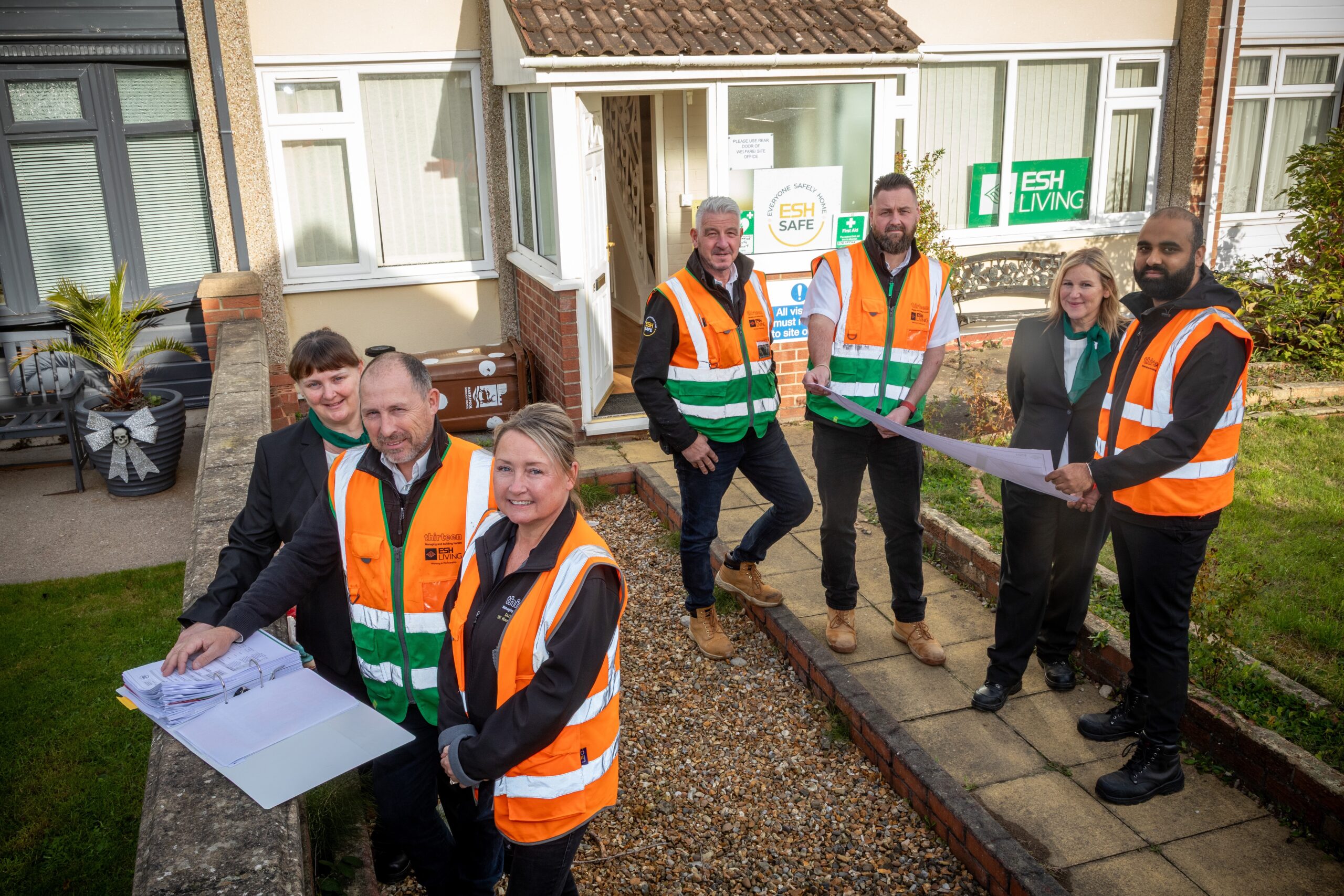
Esh Construction has completed a £2.1m refurbishment programme across 297 homes in the Throston Grange area of Hartlepool, closing out another package of planned housing upgrades for Thirteen Group under its capital investment framework. The work included new kitchens, partial electrical upgrades, and electric fire removals, with the contractor and client also working with residents on options to personalise elements of the finished homes.
The project is modest in capital value when set against headline-grabbing new-build schemes, but it is firmly within one of the busiest and most consequential areas of the current housing market. Planned maintenance, stock modernisation, safety upgrades, and energy-related improvement works are continuing to generate a steady stream of work across the North and Midlands as registered providers, councils, and housing associations try to bring older homes up to current expectations without waiting for wholesale redevelopment. In that context, Throston Grange is best seen as part of a much larger operational pattern rather than a one-off local refresh.
Andrew Harrow, operations director at Esh Construction, said the completed scheme showed “the strength of our partnership with Thirteen and the effectiveness of the Investment Framework”, adding that the team had been able to deliver improvements at scale while keeping residents closely involved in the process. Thirteen has said its capital investment programme, launched in 2023, has already seen thousands of homes modernised across the North East and Yorkshire, with a wider focus on planned maintenance, building safety, customer experience, and social value. The Hartlepool work also follows other recent packages involving heating and energy-efficiency upgrades in the region.
That continuity matters. The social housing improvement market is increasingly being delivered through repeat partnerships and capital frameworks rather than project-by-project procurement. From a client perspective, the attraction is consistency of delivery, resident handling, and a clearer route into multiple workstreams. From a contractor perspective, frameworks of this kind offer a more stable workload mix and a chance to build delivery teams around recurring tasks such as kitchen replacement, electrical works, communal upgrades, roofline works, heating renewal, and retrofit preparation. The work may be less conspicuous than new build, but it is operationally demanding because it is dispersed, resident-facing, and intolerant of poor coordination.
There is also a wider strategic shift in play. Housing providers are increasingly balancing three pressures at once: the need to maintain existing stock well, the need to respond to safety and compliance expectations, and the need to improve energy performance in homes that were not built with current standards in mind. That combination is pushing planned works programmes into a more complex space than traditional cyclical maintenance. Kitchen replacement on its own is relatively straightforward. Kitchen replacement coordinated with electrical upgrades, future energy plans, resident consultation, and the funding logic of long-term asset management is not.
For contractors, that means the market for refurbishment is continuing to professionalise. Success depends less on simple trade capacity and more on data, resident engagement, sequencing, cost control, and the ability to move from one package into the next without losing quality. Esh’s completed Hartlepool scheme, and the follow-on work already planned elsewhere in Thirteen’s estate, fits that picture neatly. It is routine work only in the sense that it happens often. In delivery terms, it sits inside one of the most important and most persistent construction markets now operating across the UK.