IN Brief:
- Eurotunnel has been fined £2.25m after a serious maintenance-related incident at Folkestone.
- The prosecution focused on failures in training, maintenance, safe systems of work, and risk assessment.
- The case is a sharp reminder that infrastructure maintenance carries the same delivery obligations as new build.
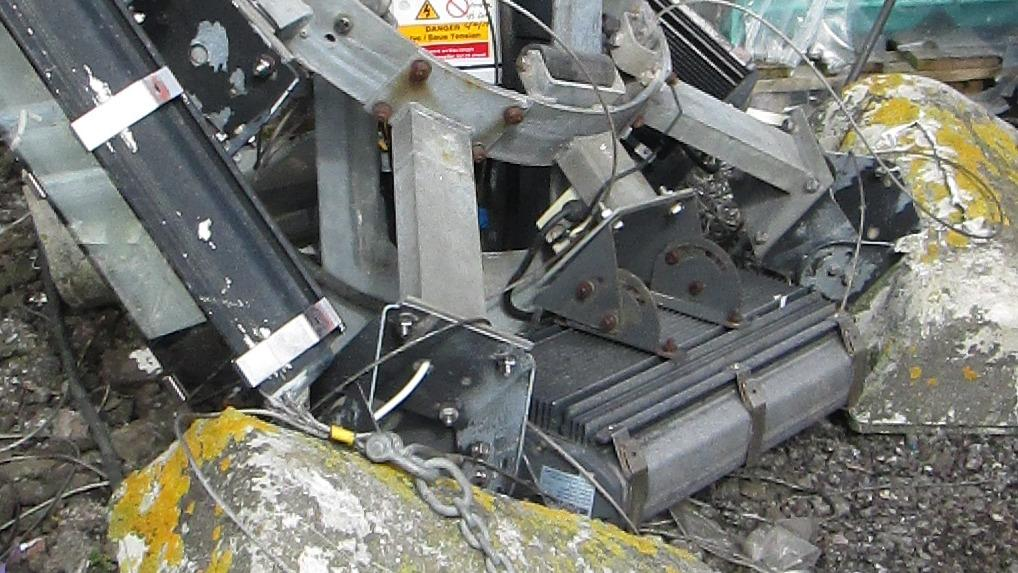
Eurotunnel has been fined £2.25m after an engineering surveyor was seriously injured by a falling lighting carriage during maintenance work at the Channel Tunnel terminal in Folkestone. The prosecution followed an investigation by the Office of Rail and Road and centred on an incident in which a 115kg lighting unit fell from height while being winched up a mast during an inspection operation.
The incident happened at Eurotunnel’s UK terminal in April 2018. The surveyor was standing at the foot of one of the lighting masts with the maintenance team assisting the inspection when the wires holding the carriage failed and the unit fell from about 18 metres, causing multiple serious injuries. The regulator said the outcome could have been worse had the falling structure not been partly broken by objects already lying in the area. The company pleaded guilty to an offence under the Health and Safety at Work etc. Act 1974.
The Office of Rail and Road said the Channel Tunnel Group had control over the maintenance of the lighting masts, associated equipment, and the premises in which they were located, and had failed to take the measures necessary to ensure the plant was safe and without risks to health. Richard Hines, HM chief inspector of railways, said the case involved “entirely preventable maintenance and planning errors”, pointing in particular to inadequate training, the absence of a suitable safe system of work, ineffective preventative maintenance, and a lack of an appropriate risk assessment for the specific task being carried out.
Although the incident sits within rail infrastructure rather than mainstream building work, the construction relevance is immediate. Plant inspection, temporary arrangements, maintenance access, lifting systems, and work at height all sit within the same discipline of planning and control that runs through site operations more broadly. The legal route may differ depending on asset type and duty holder, but the underlying obligations are familiar: equipment has to be maintained, tasks have to be assessed properly, competence has to be demonstrable, and site conditions have to be controlled well enough that a foreseeable failure does not turn into a life-changing event.
That is particularly important at a time when the industry is under growing pressure to address competence in a more structured way. New-build work often attracts the most scrutiny because it is visible and programme-led, but maintenance activity can be more exposed to routine drift. Teams inherit legacy equipment, access conditions become normalised, and tasks that appear repetitive begin to lose the discipline that should accompany them. In infrastructure environments, where assets remain in service and operational continuity matters, the risk is that abnormal work is treated as ordinary because it sits inside a familiar setting.
This case cuts against that complacency. It shows how quickly a maintenance task can move from procedural routine to catastrophic failure when training, planning, and asset assurance are not aligned. It also reinforces a wider point for clients, principal contractors, and asset owners alike: compliance is not satisfied by having systems on paper. It has to be visible in the condition of equipment, the preparation of the task, the competence of the people involved, and the practical control measures in place when the work starts.