IN Brief:
- ETH Zurich and Empa researchers have developed a mineral-bound sawdust composite for interior partition applications.
- Initial testing suggests fire performance comparable with cement-bonded particleboard, with lower binder content.
- The panel can be broken down and reused, though cost and scale-up remain the key commercial hurdles.
ETH Zurich researchers, working with Empa, have developed a flame-retardant panel material made from sawdust and a mineral binder, opening a possible route to lighter interior partition boards with a lower cement burden. The composite uses struvite, a crystalline ammonium magnesium phosphate, with crystal growth controlled through an enzyme extracted from watermelon seeds so the mineral can bind sawdust particles into a robust board.
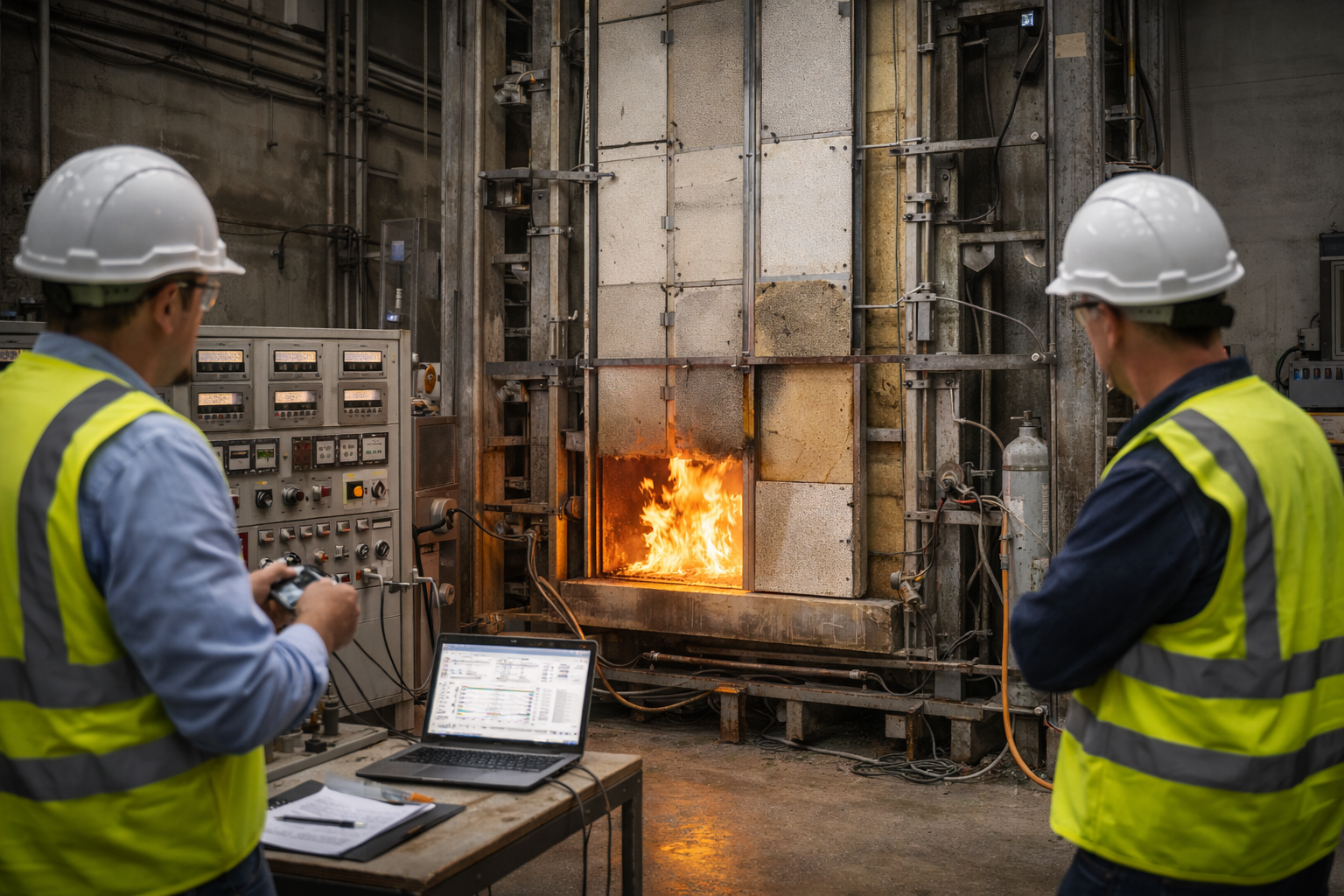
The system is aimed squarely at internal fit-out rather than headline-grabbing structural claims. Tests reported by the research team show the composite takes more than three times longer to ignite than untreated spruce, while initial estimates suggest it could reach the same fire-protection class as conventional cement-bonded particleboard. The board also uses around 40% binder, compared with the 60-70% cement content typically associated with cement-bonded products, making it materially lighter.
The other point in its favour is end-of-life handling. Once removed, the board can be mechanically broken up and heated to recover components for reuse, rather than being written off as demolition waste. Commercial viability is still unresolved, because struvite remains relatively expensive against cement or polymer binders. But the researchers see a possible route through sewage treatment plants, where struvite builds up in pipes and has to be removed anyway. If that recovery loop can be made to work at scale, the panel could move from lab curiosity to a serious circular-material candidate for interior construction products.