IN Brief:
- Heidelberg Materials produced more than 1,300 tonnes of asphalt using 100% hydrogen at Criggion in Powys.
- The trial cut Scope 1 emissions by 76% and reduced the asphalt’s overall carbon footprint by 23%.
- The result shows fuel switching at asphalt plants can move from concept into live industrial production.
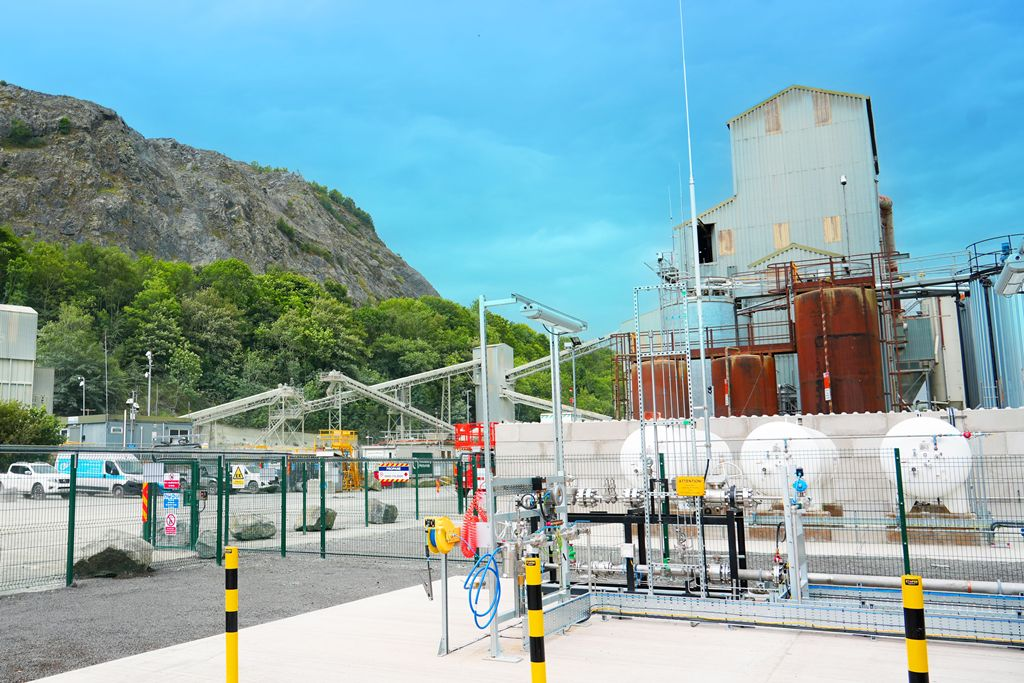
Heidelberg Materials UK has completed a hydrogen fuel-switching trial at its Criggion asphalt plant in Powys, producing more than 1,300 tonnes of asphalt using 100% hydrogen in place of liquid fossil fuels. The project formed part of the Industrial Hydrogen Accelerator programme, with part-funding from the Department for Energy Security and Net Zero.
The switch was made without affecting the quality or performance of the asphalt. During the trial, 4,522kg of hydrogen were used, cutting Scope 1 direct emissions by 76% and reducing the overall carbon footprint of the asphalt by 23%. The run saved 25,105kg of CO2 at plant level.
The project is significant because asphalt production relies on high-temperature heat that is harder to decarbonise than many lower-temperature manufacturing processes. Rather than focusing only on the material mix, the Criggion trial targeted the plant fuel itself. Further detail on the project is available from Heidelberg Materials UK.