IN Brief:
- Military to Masonry launches at Waterbeach Barracks on 13 March with a direct route from armed forces transition into bricklaying employment.
- The model combines a 10-day intensive programme, Level 1 health and safety training, a CSCS Red Trainee Card, and live-site preparation.
- Partner employers are committing to guaranteed jobs, mentoring, and progression towards NVQ Level 2.
A new construction pathway aimed at armed forces leavers is being launched this week at Waterbeach Barracks in Cambridge, with a model built around fast-tracked training and a guaranteed move into paid site work.
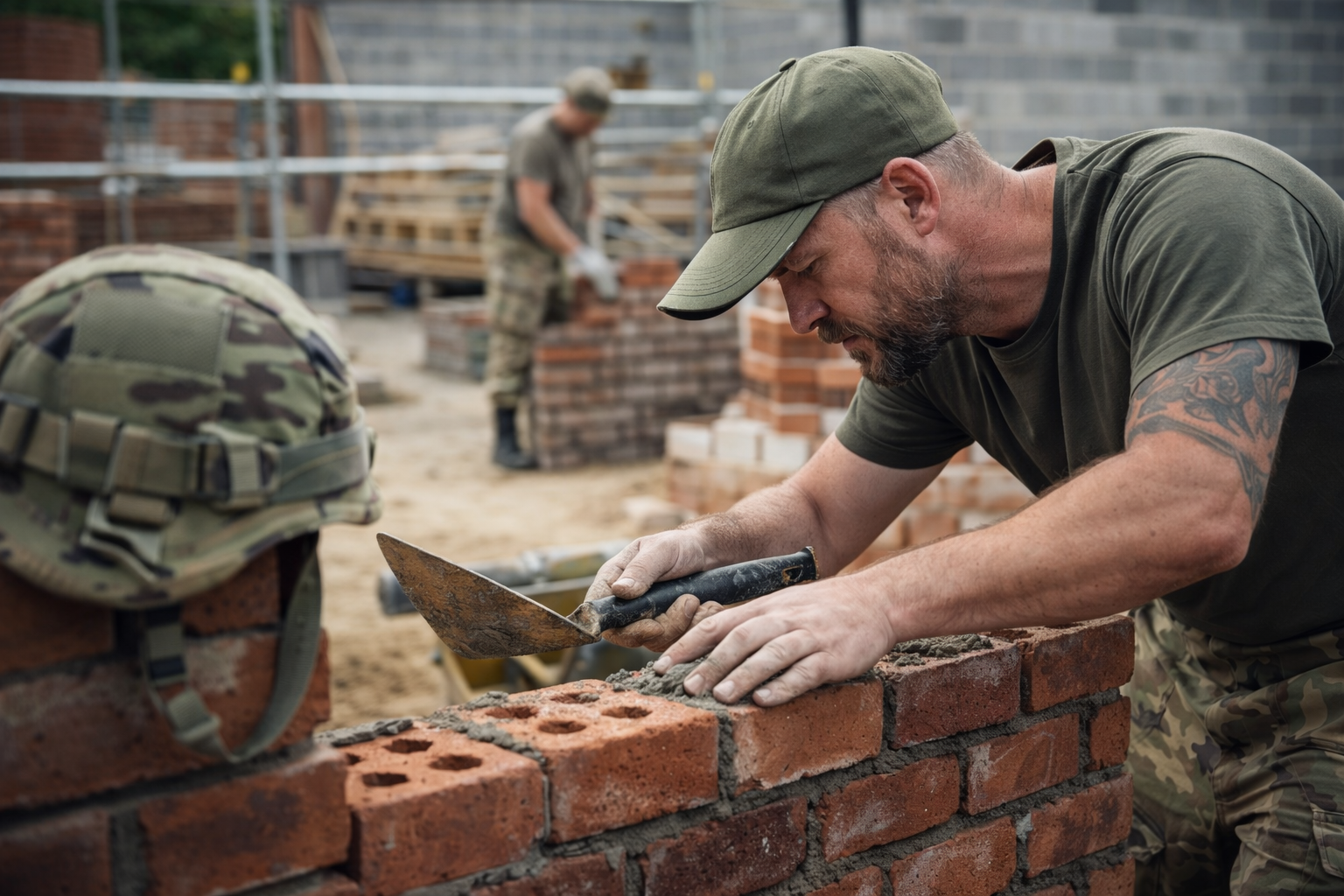
Military to Masonry is focused on masonry and bricklaying roles, combining a 10-day intensive practical programme with entry-level qualifications and direct recruitment by partner employers. The initiative is designed to take complete beginners through site preparation and into live construction environments, with organisers placing particular weight on what happens after training rather than on classroom completion alone.
The programme is being delivered through a partnership involving Site Ready Solutions, the National Masonry Academy, the Masonry Association of Great Britain, G&B Brickwork, and Grayson. Before practical training starts, learners complete a Level 1 Health and Safety in a Construction Environment qualification and apply for a CSCS Red Trainee Card. Training then moves into a disciplined, site-style format, with learners progressing to cavity wall and blockwork tasks and working to productivity targets by the end of the course.
That structure is intended to reduce one of the more stubborn problems in construction recruitment: getting new entrants to a point where they can contribute safely and productively from the first days on site. In this case, the cohort is capped at six learners, allowing for close supervision and a stronger mentoring structure.
Eve Livett, CEO of the Masonry Association of Great Britain, said: “Military to Masonry represents exactly the kind of bold, practical leadership our industry needs. This programme doesn’t offer sympathy, it offers a future. Service leavers bring discipline, teamwork and resilience in abundance, and masonry offers them something just as powerful in return: pride in their craft, visible results and a long-term career.”
The launch event on Friday 13 March will bring together employers, former service personnel, and industry bodies, with live bricklaying activity and a military-style assault course challenge intended to reflect the practical and physical overlap between military service and site work.
The wider backdrop is a construction labour market still wrestling with skills shortages, uneven entry routes, and an ageing workforce across key trades. A pathway that links training, accreditation, mentoring, and guaranteed employment is a more tightly engineered proposition than the loose promise of a job at the end of a course, which has rarely been enough on its own.
Military to Masonry is also being positioned as a long-term progression route rather than a short placement. Alongside immediate employment, the model includes continued onsite mentoring, further short-course training, and progression towards NVQ qualifications, supervisory roles, and site management over time.
The ambition now is to scale beyond initial cohorts and establish a recognised bridge between military transition and skilled construction work. If that can be replicated reliably, the programme could become a useful template for other trade shortages that have been discussed for years and filled rather less often.