IN Brief:
- The Future Homes Hub has launched a seven-point guidance package to help builders prepare earlier for the Future Homes Standard.
- The campaign focuses on grid capacity, low-temperature heating, design changes, build quality, commissioning, and customer support.
- Early pilots, utility planning, and handover discipline are being positioned as delivery-critical rather than secondary compliance tasks.
The Future Homes Hub has launched Future Homes Standard Essentials, a campaign and guidance package aimed at moving housebuilders into earlier and more practical preparation for the next step in housing regulation.
The framework is built around seven actions drawn from early delivery experience: lead early and learn fast, prioritise grid availability, own the customer journey, evolve design, get heating design right, build as designed, and commission with care. The effect is to pull compliance forward from the end of the process into land, utilities, design, procurement, construction quality, and aftercare.
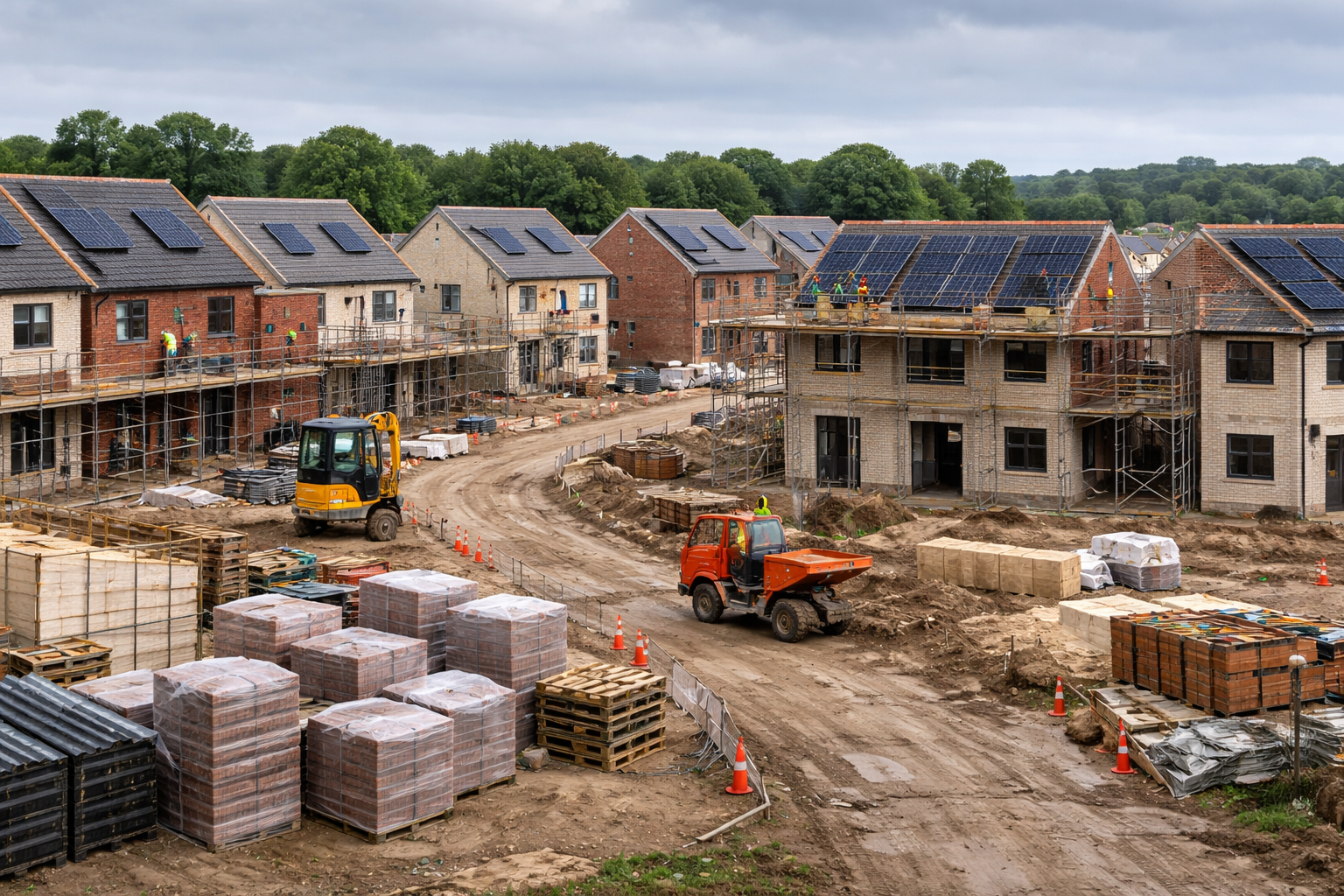
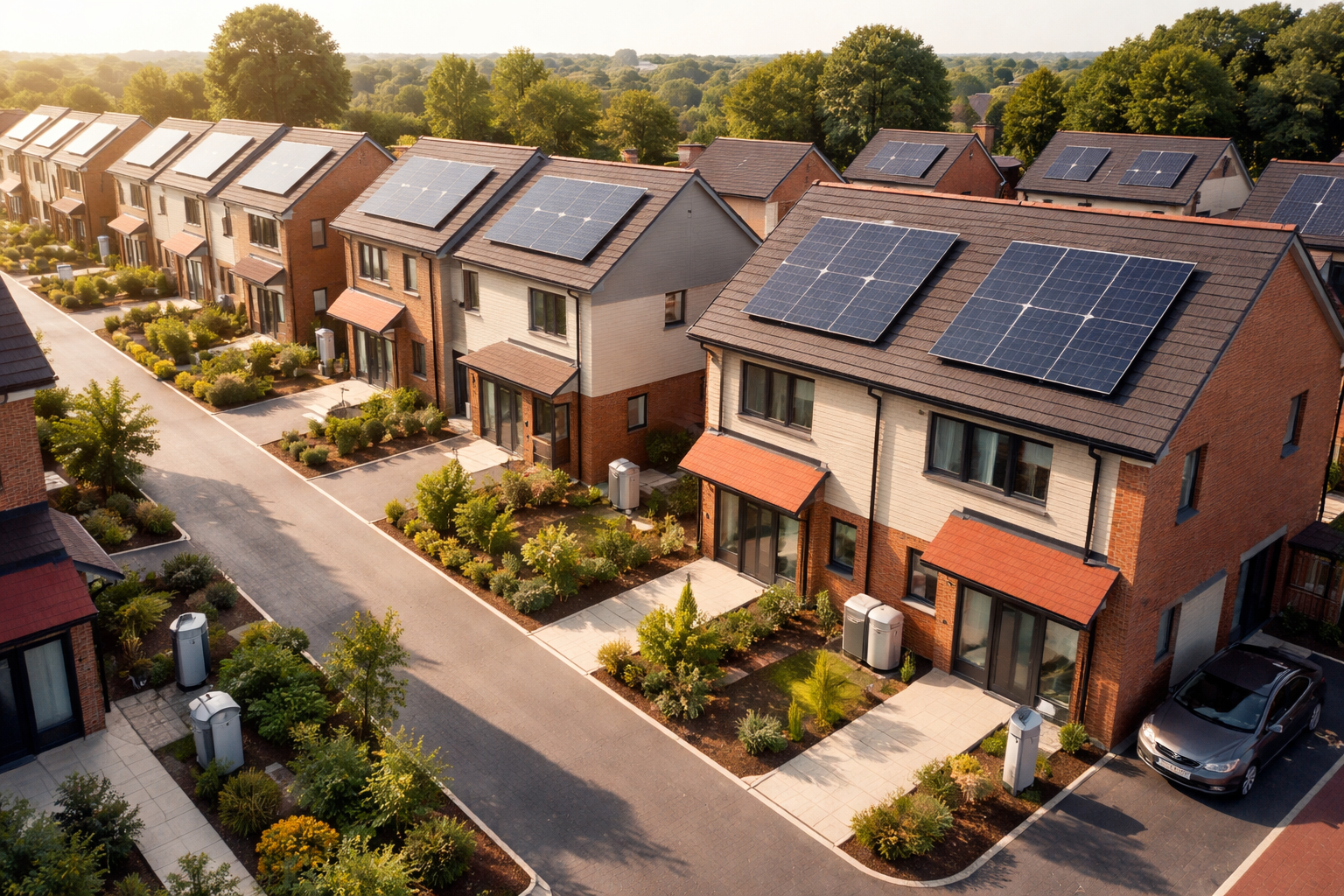
That reflects the technical shift behind the forthcoming standard. The Future Homes Hub describes the Future Homes Standard as a move to fossil fuel-free new homes built around low-temperature heating systems and, in most cases, photovoltaic panels. That changes the delivery profile for new housing schemes, with more risk sitting in electrical capacity, system design, installation accuracy, commissioning, and occupant handover.
Grid availability is one of the clearest pinch points. The guidance calls for very early engagement with distribution network operators, or with independent providers where relevant, because all-electric homes need greater capacity for heating, hot water, EV charging, and solar export. On that basis, grid connection stops being a back-end servicing issue and becomes a programme, phasing, and cost issue from the earliest stages.
The campaign is also aimed squarely at smaller builders. The Future Homes Hub says SMEs are central to the government’s target of 1.5 million new homes, and the material being released around the campaign includes guidance on grid connections, heating design, procurement, and the customer journey. That reflects the practical reality that regulatory change will have to land across smaller sites and leaner delivery teams, not only in large-volume pilot schemes.
The wider transition is already visible. The Future Homes Hub says around 25% of UK new-build completions in 2025 installed a heat pump, up from 15% in 2024, and it frames the new standard as a further step away from gas connections and toward all-electric delivery. Government consultation work on the Future Homes and Buildings Standards has already set out technical proposals for changes to Part L, Part F, and associated calculation methods, while Part O overheating requirements have been in force since December 2021.
What this launch does is translate that regulatory direction into a site and delivery checklist. Design intent, utility strategy, procurement choices, build quality, commissioning, and occupant handover are all being placed on the critical path now, rather than at the point a standard becomes unavoidable.