IN Brief:
- The £100m Discovery Building at Rothera Research Station has formally opened as part of the £670m Antarctic Infrastructure Modernisation Programme.
- The two-storey, 4,500m² facility consolidates power, water, logistics, workshops, offices, and welfare spaces, replacing multiple legacy buildings.
- A high-performance envelope, photovoltaics, and combined heat and power are expected to reduce station carbon emissions by about 25%, with deconstruction of redundant buildings under way.
The Discovery Building at Rothera Research Station has formally opened, delivering a new operational centre for the British Antarctic Survey’s largest Antarctic facility. The £100m, two-storey building provides around 4,500m² of gross floor area and extends to nearly 90 metres in length, consolidating science support and station operations within a single structure.
Commissioned through the Natural Environment Research Council, part of UK Research and Innovation, the project forms part of the UK Government’s Antarctic Infrastructure Modernisation Programme, a long-term investment programme valued at £670m. Work began in 2019, and the building is now operational, with completion activities continuing through 2026.
Sweco acted as Lead Designer and delivered structural, civil, mechanical, and electrical design, working alongside Hugh Broughton Architects and the wider delivery team, including BAM, Ramboll, NORR, G&A Barnie Group, OFR, and Turner & Townsend. Sweco’s scope also covered building management systems, ICT, fire engineering inputs, acoustics, sustainability, carbon services, and BREEAM-related workstreams to coordinate performance across disciplines.
The building is designed to replace a set of ageing, dispersed facilities at the station by bringing core services together. It integrates power generation and distribution, water production, logistics and field preparation areas, workshops, offices, medical facilities, communications functions, and welfare and recreation spaces. The station typically supports around 160 personnel in summer and 25 to 30 in winter, placing a premium on reliable systems and internal connectivity.
A key design driver is reducing exposure and heat loss by limiting external movements between functions, including an end-to-end internal corridor across the building’s length. The building incorporates a central store intended to improve stock control and cargo handling, alongside workshop and preparation areas that support field operations.
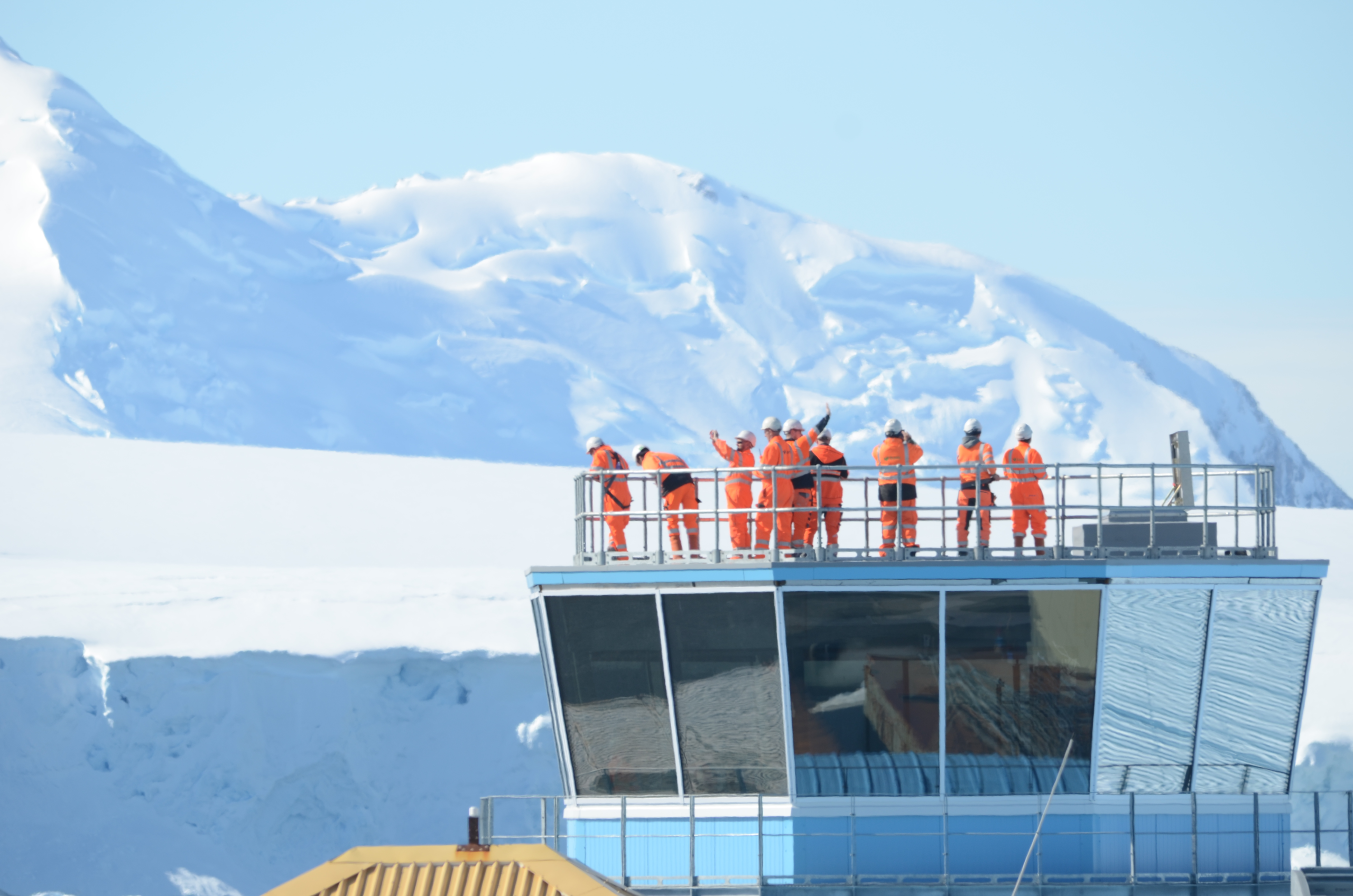
External and environmental features include a wind deflector designed to reduce snow accumulation around the structure, and an operations tower providing 360-degree visibility across the runway, wharf, and station buildings. Envelope and energy measures include a thermally efficient fabric, triple glazing, composite insulated metal panels, and the integration of photovoltaic solar panels and a combined heat and power plant.
Across programme reporting, the consolidated hub and energy system upgrades are expected to reduce Rothera Research Station’s carbon emissions by approximately 25%, with BREEAM ‘Outstanding’ certification referenced in the project’s sustainability targets. Logistics remain a defining constraint, with materials and equipment transported thousands of miles to site and construction executed through tightly planned seasonal windows.
Max Joy, Business Area President, Sweco UK, said: “Operating in the extreme demands of the polar environment places exceptional requirements on building performance, logistics and reliability. Sweco’s role has been to ensure that the Discovery Building meets those requirements through robust, coordinated and technically precise design. The project has involved several hundred Sweco specialists from the UK and Europe from 2018 to today, and we are proud to have contributed our expertise to a facility that will support scientists and society alike.”
With the Discovery Building now in use, the programme has moved into phased deconstruction of redundant buildings, a controlled, piece-by-piece approach designed to manage environmental risk and waste streams in line with Antarctic operating requirements.