IN Brief:
- Network Rail restarted the remaining £1.4m Longport station bridge works from 31 October.
- Replacement bridge-side steelwork, balustrades, and barriers follow earlier manufacturing problems.
- Overnight weekend and extended weekday closures are planned while train services continue operating.
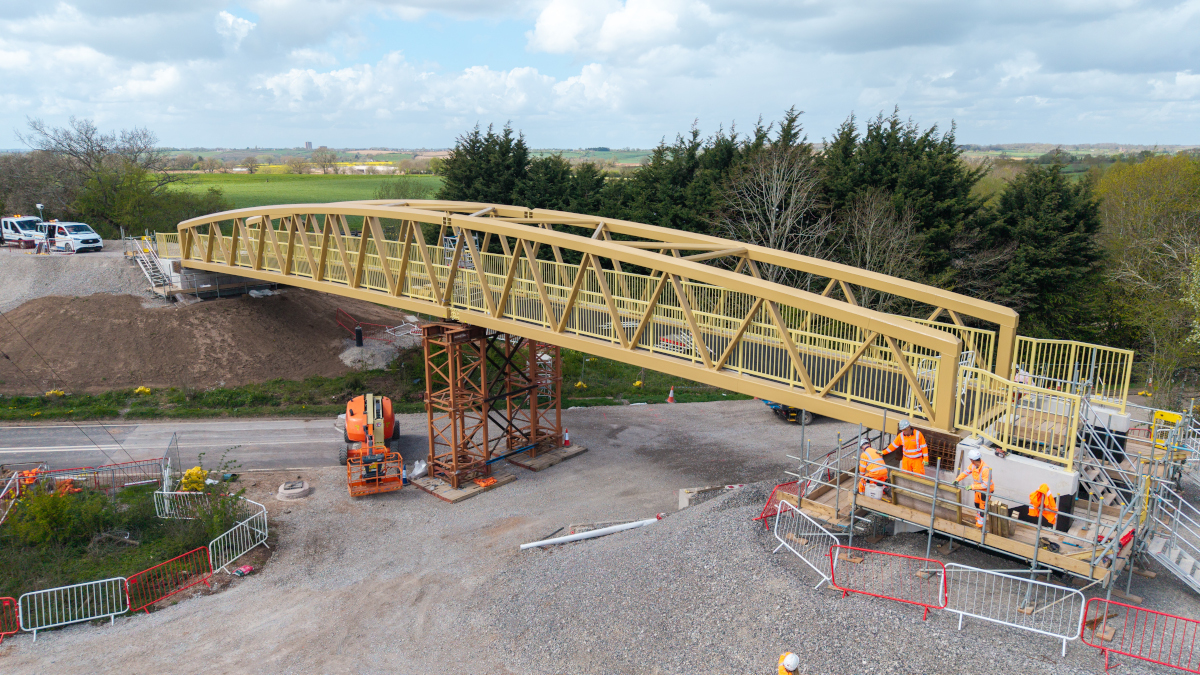
Network Rail has restarted the remaining refurbishment of Longport station footbridge in Stoke-on-Trent, following the remanufacture of steel panels required for the structure. Story Contracting is delivering the £1.4m programme, which includes replacement bridge-side steelwork, balustrades, and safety barriers. Work resumed from Saturday 31 October, with the rail infrastructure owner expecting completion by the end of February 2027 and setting out a sequence of pedestrian closures to permit installation above the operating railway.
The bridge carries pedestrians across the West Coast Main Line and provides a connection used by passengers and local people. The remaining works follow problems with manufactured structural components that interrupted an earlier construction programme. The project’s history includes a period when the crossing was not available to users; Network Rail reopened it in February 2026 while work to finish the refurbishment remained outstanding. The latest programme consequently concerns completion of an existing asset rather than the construction of a new station bridge.
The remaining work includes newly manufactured steelwork for the sides of the bridge, together with balustrades and safety barriers. These components form the protective boundaries of the pedestrian crossing and have to connect safely with the retained structure over the live railway. Earlier manufacturing and welding problems meant some of the original components failed to meet the required standards, leading Network Rail and Story Contracting to arrange replacements before completing the refurbishment. The £1.4m figure relates to the overall upgrade programme, rather than a separate new contract for the restart.
Access to the bridge will be restricted overnight on Saturdays, from 11pm until 9am on Sundays, between 31 October 2026 and 28 February 2027. Network Rail also identifies a full closure from Monday 30 November until Friday 18 December inclusive, with additional restrictions planned during February. These restrictions are on pedestrian use of the bridge, while the company states that rail services at Longport will continue unaffected. Pedestrians and passengers will need to follow the alternative access arrangements during closures.
The closure programme reflects the constraints of working above an operational railway. Installing bridge-side steelwork and protective barriers involves controlled access, lifting, positioning, fixing, and inspection, with the worksite separated from public routes while components are being handled. Network Rail expects most activity to take place when trains are not running, allowing planned work to be coordinated with railway operating arrangements. The full pedestrian closures provide additional periods in which the bridge can be used as a construction area rather than a public crossing.
Bridge-side components also need to connect to the retained parts of the footbridge without compromising clearances, user safety, or the ability to maintain the structure in future. Balustrades and barriers must fulfil their protective function continuously across joints and junctions, especially where people pass close to changes in bridge geometry. Inspection of the finished details is part of returning the crossing to normal use. Network Rail has identified the remanufacture of panels as a necessary step before those final works could proceed.
In December 2025, Network Rail attributed the earlier delay to components and welds that did not meet its required standards. It subsequently restored pedestrian access in February 2026, even though outstanding improvements still had to be completed. That interim reopening was significant for a station where a diverted pedestrian route had been necessary, but it did not remove the need to replace the affected steelwork. The new timetable sets out when the remaining installation is expected to take place.
Andy Johnson, Network Rail’s project manager, confirmed that the team had returned to complete the work after remanufacturing a key bridge component with Story Contracting. He advised pedestrians and passengers to allow additional time and follow the alternative route during closures. The detailed timetable identifies overnight restrictions from Saturday into Sunday, a continuous closure from 30 November through 18 December, and further restrictions in February; those are the operative dates for public access planning.
The programme’s public dates create clear milestones for site management. Weekend closures begin at the end of October, the longer November-to-December restriction covers a concentrated construction period, and further work is scheduled for February. Completion is expected by the end of that month. As with other refurbishment schemes, final handover depends on the installation and acceptance of the remaining components rather than on the reopening of the bridge during an earlier interim phase.
Completion remains scheduled for the end of February 2027, following installation and inspection of the replacement bridge-side components and safety barriers. Until then, Network Rail and Story Contracting must coordinate work above the West Coast Main Line with the announced pedestrian closure periods, while normal rail services are expected to continue. The next public access milestone is the full closure beginning on 30 November, followed by the further February works before the refurbishment is finished.