
IN Brief:
- Johnson Matthey has licensed technology for Phelan Green’s planned eSAF facility in Saldanha Bay.
- The first phase is expected to produce around 35,000 tonnes of eSAF per year for EU and UK markets.
- Full build-out is expected to reach about 140,000 tonnes per year, forming part of a R47bn green hydrogen project.
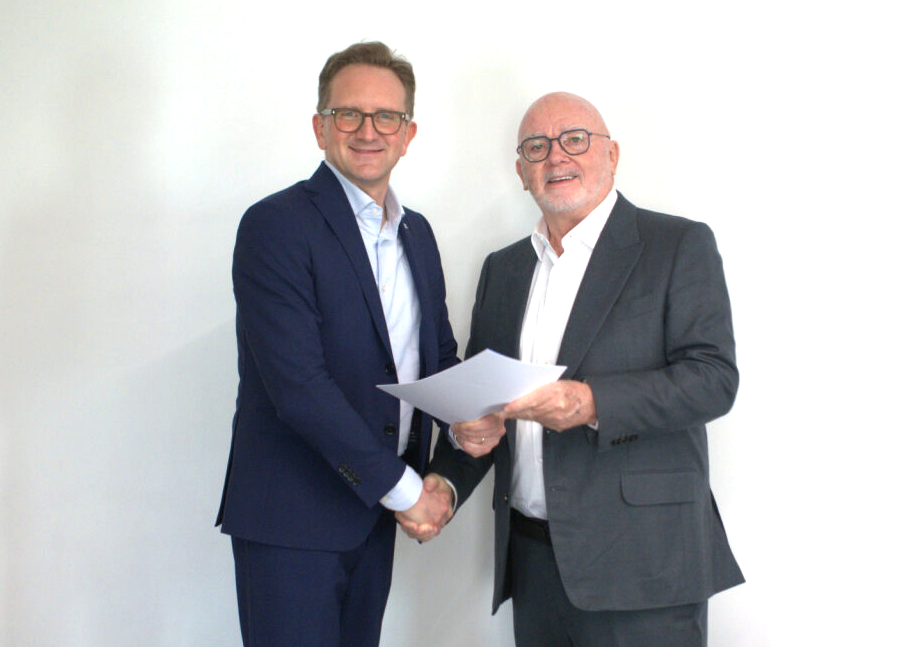
Johnson Matthey has been selected by Phelan Green Hydrogen to provide licensed technologies for a planned electro-sustainable aviation fuel facility in Saldanha Bay, South Africa.
Construction of the facility is expected to begin by the end of 2026. The project forms part of the wider Phelan Green Hydrogen Project, which is expected to involve investment of R47bn, equivalent to more than £2bn.
The licence covers the first phase of the eSAF project. Once complete, that phase is expected to produce around 35,000 tonnes of electro-sustainable aviation fuel each year, intended for sale into EU and UK markets. Across all phases, the facility is expected to supply about 140,000 tonnes annually.
Johnson Matthey’s HyCOgen technology uses a catalysed process to convert carbon dioxide and electrolytic hydrogen into carbon monoxide, which is then combined with additional hydrogen to form syngas. The process integrates with FT CANS technology, jointly developed and co-owned by Johnson Matthey and bp, to convert syngas into synthetic crude oil. That material is then upgraded into synthetic paraffinic kerosene for aviation fuel use.
The project is also linked to Honeywell process technology selected earlier for the planned facility, showing how large e-fuels projects depend on multiple technology packages being combined into a bankable industrial plant. Phelan Green has positioned the Saldanha Bay scheme within a wider strategy across renewable energy, hydrogen, e-fuels, battery storage, and wind.
Although the site is outside the UK and Europe, the project has a direct connection to the European construction and engineering market because the fuel is intended for EU and UK customers and because UK-based Johnson Matthey is supplying core process technology. The scheme represents the kind of industrial construction pipeline emerging around hard-to-abate sectors, where decarbonisation depends on large plants, renewable power, water, carbon dioxide supply, electrolysers, synthesis technology, storage, export logistics, and port infrastructure.
eSAF projects are structurally different from conventional renewable generation schemes. They combine energy production, chemical processing, hydrogen systems, fuel upgrading, safety-critical storage, export infrastructure, and environmental permitting. Construction planning must therefore integrate civil works, process plant installation, high-specification piping, electrical systems, controls, fire safety, hazardous-area management, commissioning, and long-term maintenance access.
Technology selection is a key commercial milestone for projects of this kind. Lenders, contractors, engineering partners, and offtakers need confidence that the core process route can be delivered at commercial scale. Licensing HyCOgen and FT CANS gives the first phase a defined synthesis pathway, while the broader project still has to progress through detailed engineering, procurement, permitting, financing, and site delivery.
The aviation fuel market is changing quickly. Aviation has fewer decarbonisation options than many land-based sectors, and synthetic fuels are being positioned as one route to meeting future mandate requirements without waiting for entirely new aircraft fleets. That creates demand for commercial-scale plants, while also increasing pressure on construction capacity, specialist engineering, electrolyser supply, grid or renewable energy connections, and carbon sourcing.
For construction and engineering businesses, projects such as Saldanha Bay show where parts of the industrial market are heading. The work is not only about building renewable assets; it is about connecting power generation to chemical conversion, fuel production, storage, and export. Companies able to manage interfaces across energy, process engineering, civil construction, and commissioning will be central to whether e-fuels move from development pipelines into operating industrial capacity.

