IN Brief:
- The Department for Infrastructure has scheduled a £1.1m walking and cycling upgrade between Sawmill Road and Carrigs Road.
- The 1.7km scheme on the A50 Castlewellan Road/Newcastle Road is due to start on 9 November 2026 and last approximately 25 weeks.
- Roadworks will involve daytime temporary signals, lane and footway closures and a temporary 40mph limit during the construction period.
Northern Ireland’s Department for Infrastructure has confirmed that construction of a £1.1m pedestrian and cycling scheme between Castlewellan and Newcastle is due to begin on Monday 9 November 2026. The works will cover approximately 1.7km of the A50 Castlewellan Road and Newcastle Road corridor, extending between Sawmill Road and Carrigs Road. The programme is expected to last around 25 weeks, with completion anticipated by summer 2027.
The new section runs along the A50 between Sawmill Road and Carrigs Road, extending an earlier improved route towards Newcastle. The department describes the 1.7km scheme as completing an active travel corridor for walking, wheeling and cycling between the two County Down towns. The project is a roadside construction programme, so the work must be sequenced alongside continuing vehicle and pedestrian movements rather than within an isolated building site. Detailed pavement widths and surfacing specifications have not been published with the ministerial announcement.
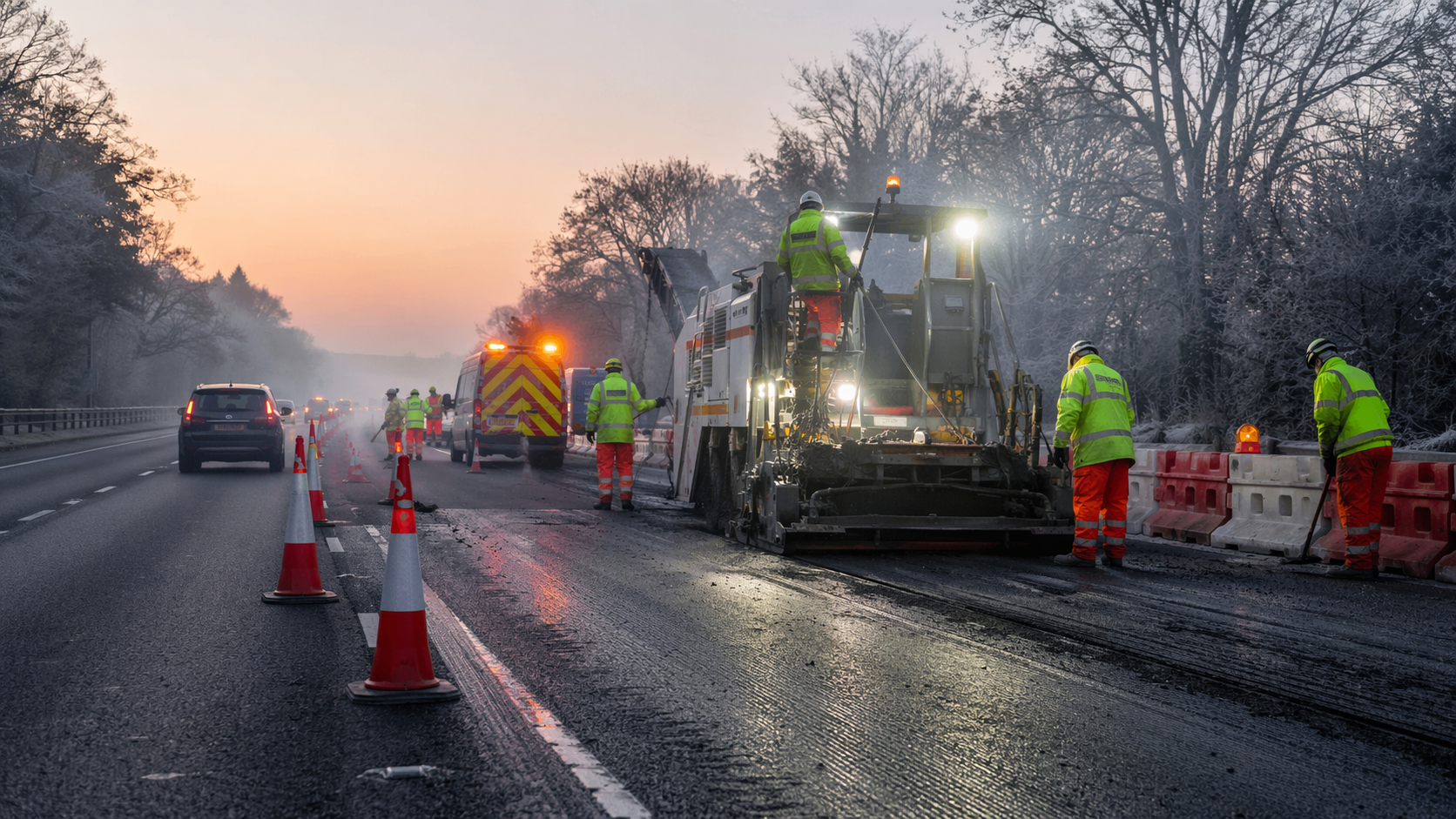
Temporary lane closures and traffic signals are planned between 9.30am and 4.30pm, with footway closures during particular stages of the works. A temporary 40mph speed limit will apply throughout the construction period. The department has asked road users to allow additional journey time and follow the restrictions while staff are working along the route. Those controls will allow sections of the highway corridor to be occupied for construction while managing movements past the work areas.
Construction on a linear route involves transferring crews and equipment along successive work fronts. Traffic signals need to match the length and location of each active section, and pedestrian arrangements must change as existing footways are closed or the new route is formed. The detailed sequence has not been released, but the published daytime control hours establish when the most disruptive traffic measures are planned. Coordination will be needed between the highway authority, its contractor and users of the A50 as the work advances.
Infrastructure Minister Liz Kimmins said the route would improve opportunities for people choosing to walk, wheel or cycle between Newcastle and Castlewellan. She asked residents and road users to cooperate with the temporary restrictions. The government has allowed approximately 25 weeks for construction, carrying the programme through winter and spring, and expects the completed route to be available in summer 2027. That remains a forecast completion period rather than a confirmed opening date.
An earlier phase of the Castlewellan corridor was completed in August 2022 following investment of £345,000. It upgraded approximately 1.6km of combined footway and cycleway between the town’s gateway feature and Sawmill Road. The previous work included widening and resurfacing, drainage improvements, fencing and signage. Those were features of the completed 2022 project; the department has not stated that the new 2026 section will use exactly the same construction details.
The new £1.1m allocation covers the subsequent 1.7km section and should be distinguished from the earlier £345,000 improvement. Its limits connect the previous route at Sawmill Road with the corridor towards Carrigs Road. That progression helps explain why the new project is described as completing a continuous active travel connection. The combined work represents successive investments on the corridor, although no forecast traffic counts or future cycling demand figures were provided with the announcement.
Roadside work of this kind commonly combines surfacing, level adjustment, drainage, and treatment at accesses or junctions, with the details dictated by the highway design. The precise scope of the new section has not been published, so specific structures or utilities diversions cannot be attributed to this project. What has been confirmed is the physical route, construction period and traffic management. Those provide the delivery framework within which the individual work fronts will be organised.
Temporary footway closures create a separate access question from the operation of traffic signals. Pedestrians and people wheeling along the corridor need to follow the signed arrangements as sections are taken out of use. Vehicles will also encounter the temporary speed restriction and managed lanes during daytime work. The department has not released a section-by-section diversion schedule, so residents and road users will need to follow the traffic management information applicable when they travel.
The November start places much of the programme in the colder and wetter months, when construction work must be planned around conditions at the site. Roadside plant, material deliveries and worker access will be coordinated with the temporary signals and lane closures. The 25-week estimate allows the department to set expectations for disruption, while summer 2027 remains the published completion target. A named principal contractor and detailed engineering programme were not included in the announcement.
The earlier Castlewellan works already established an improved 1.6km stretch to Sawmill Road. Connecting the next 1.7km will extend that provision further along the A50 and reduce the gap between completed sections of the route. During construction, however, users will encounter a different road layout as work fronts and temporary controls move. The department has emphasised compliance with those restrictions while the improvement is delivered.
Work is scheduled to begin on Monday 9 November, with lane closures, daytime signals, intermittent footway closures, and a temporary 40mph limit. Completion is expected by summer 2027. The department has confirmed the funding and length of the route; its next milestones are the start of roadside works and the phased changes to traffic management as construction progresses.