IN Brief:
- Pipeline Drillers has selected a Geonex HZR610 rig principally for the opportunity to operate it remotely from outside the launch pit.
- Geonex lists casing diameters from approximately 219mm to 813mm and radio control as an available feature of the HZR610 model.
- Potential removal of thrust walls depends on the ground, system design and individual project; the purchase does not establish an unconditional capability.
Pipeline Drillers has ordered a Geonex HZR610 horizontal boring rig, selecting the equipment partly for its ability to be operated remotely from outside a launch pit. The trenchless contractor intends to use the machine to reduce the amount of time operators spend next to moving drilling equipment in restricted excavations. A delivery date, first project and the precise specification of the ordered machine have not been disclosed.
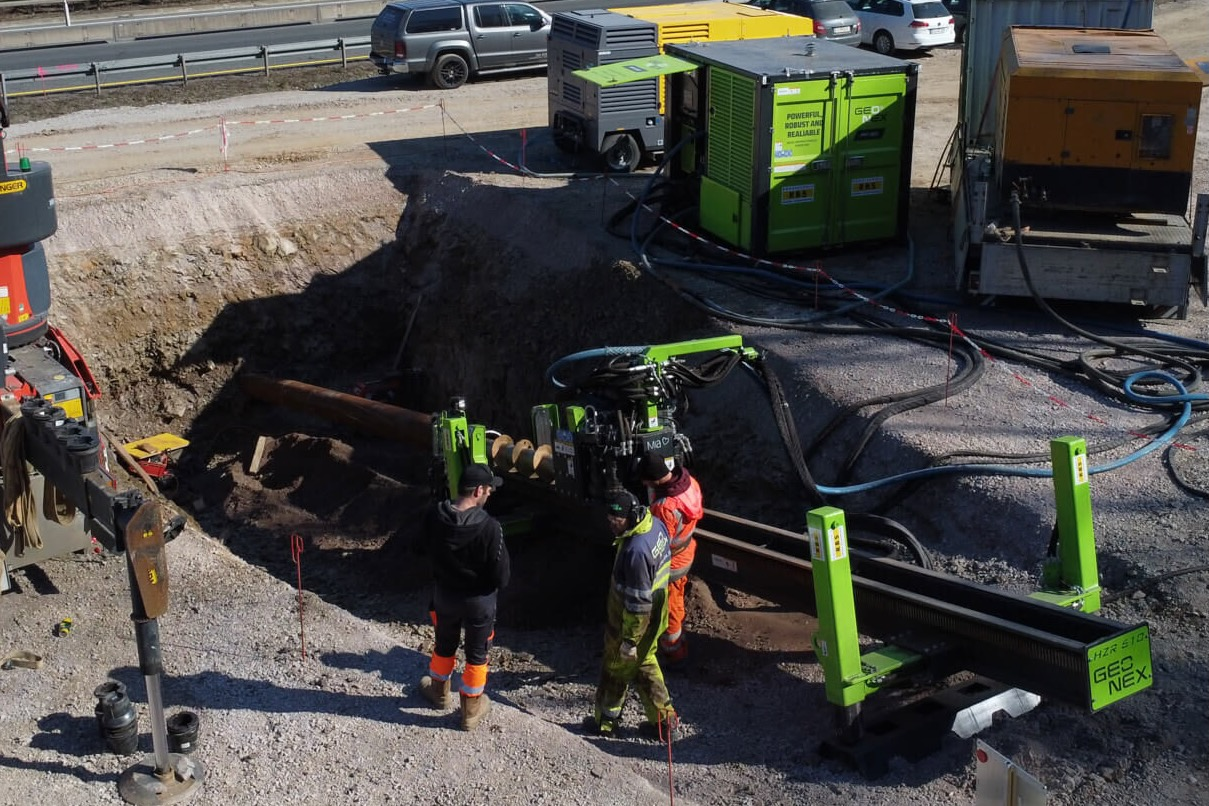
The machine’s radio control system allows the operator to manage drilling from a position above the launch pit. Removing the operator from the immediate working area during boring reduces routine exposure to rotating equipment and the restricted space around the drill. Personnel may still have to enter the excavation for assembly, inspection, servicing and other tasks, so pit access controls and safe isolation remain necessary. The investment changes how a specific operating phase can be managed rather than removing the need to enter the pit altogether.
Shirley Orr, director of Pipeline Drillers, said: “Investing in the Geonex HZR610 is about more than adding a new machine to our fleet.” Her comments linked the purchase to operative safety and the contractor’s ability to tackle demanding crossings, putting the position of the operator alongside the rig’s drilling capability in the procurement decision. The company has not disclosed a delivery date or the first scheme for which the machine will be deployed.
Trenchless casing installation allows a pipe route to pass beneath an obstruction without excavating the ground continuously between its ends. A machine works from a launch pit towards a receiving pit, advancing casing as the cutting head removes material from the bore. The contractor must match the cutting system and spoil removal to the strata encountered. Excavations remain necessary at either end, but disruption across a road, railway or other intervening surface can be substantially reduced compared with an open trench.
Geonex lists the HZR610 for steel casing diameters from approximately 219mm to 813mm. Its current product page specifies radio control and first-gear torque of 55,000Nm, alongside a modular frame and multiple tooling options. These are published model specifications, not evidence of the exact configuration ordered by Pipeline Drillers. Ground conditions, bore length, casing design and the chosen equipment will determine the loads and progress achievable on an actual crossing.
The manufacturer’s tooling range covers mixed ground and rock as well as more conventional soils. Different strata impose different cutting loads and affect the material that must be removed as the bore advances. Ground investigation therefore influences not only machine selection but the choice of cutting head, casing arrangement and construction sequence. The ability to adapt the rig gives the contractor flexibility, although no installation diameter, bore length or ground profile has yet been identified for its first use.
The HZR610 may also change the temporary works needed to resist drilling forces at the launch pit. Some launch pits require an engineered wall or other reaction structure to resist the force imposed as a casing is pushed forward. The reported HZR610 approach can permit installations without a conventional thrust wall where the ground and temporary works design allow. Pit support and the path by which operating forces are resisted must still be assessed for the actual scheme; the option is not a blanket exemption from temporary works.
When a thrust wall can be omitted, the launch arrangement may require less concrete, reinforcement, and installation time before drilling begins. The saving is dependent on ground stability, pit geometry and the way loads are transferred into the supporting arrangement. Where an alternative support structure is needed, it must be designed and installed instead. Pipeline Drillers has not published a measured programme saving or price comparison for the new rig, so the benefit currently rests on a project-specific construction option rather than a recorded outcome.
Remote operation also changes the layout of work around the excavation. The control station needs a safe position with adequate communication and visibility, while the contractor must separate personnel from moving machinery and lifting operations. Pit edges, access ladders, services, and spoil handling remain part of the method statement. Moving the operator above the pit during drilling can reduce one exposure pathway, but it does not replace the exclusion arrangements and inspection procedures required during preparation and maintenance.
The order is an equipment investment rather than a contract award for a particular pipeline. Pipeline Drillers undertakes trenchless work on crossings where maintaining the surface above the bore can be important for road, rail and utilities infrastructure. The HZR610’s casing range is relevant to larger installations, with its modular system allowing a method to be configured around different site and ground conditions. Specific clients, locations and dates will become known only when the company deploys the purchased rig.
Geonex’s technical information also describes hydraulic power equipment, frame sections and associated drilling tools. They must be delivered to site, assembled and positioned with sufficient clearance for the launch pit and lifting operations. Physical access to the working area can therefore constrain a crossing even where the bore itself can be installed without a continuous trench. Site logistics and ground support remain substantive engineering tasks alongside the machine’s remotely controlled drilling function.
Pipeline Drillers’ acquisition puts operator location at the centre of its next equipment deployment, supported by an established large-diameter casing capability. The manufacturer specifies how the HZR610 can operate, while the contractor’s first project will establish its chosen set-up and any changes to pit entry or thrust-wall construction. Delivery date, installation parameters and measurable productivity effects have not yet been announced.