IN Brief:
- Network Rail has completed slab-track replacement in Grove Hill Tunnel following a nine-day closure of the Hastings line.
- The closure also allowed inspection, drainage, power, canopy, and track maintenance along sections of the route.
- Track realignment work was designed to remove three temporary speed restrictions imposed after dry-weather ground movement.
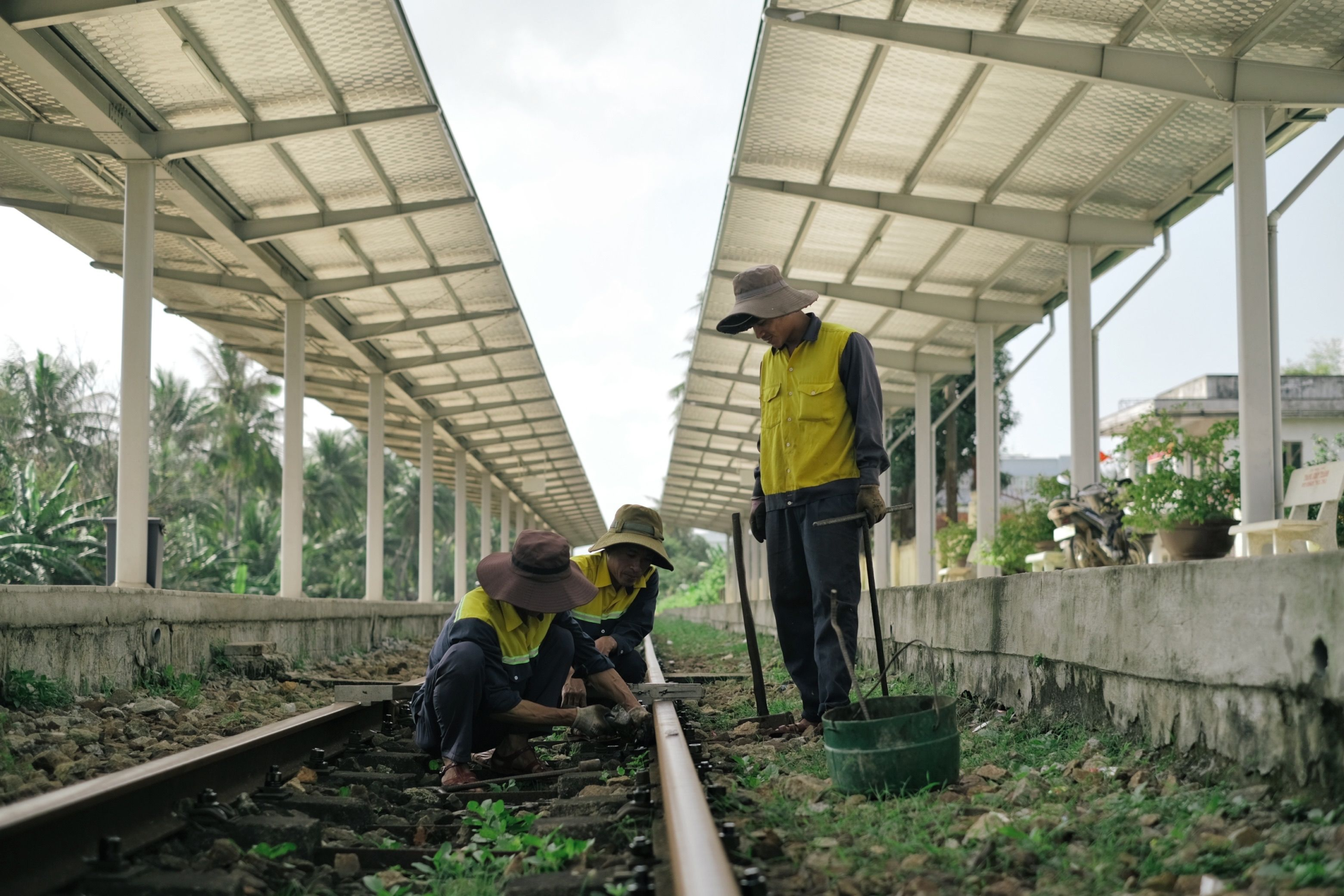
Network Rail has completed the renewal of worn slab track in Grove Hill Tunnel, south of Tunbridge Wells, and reopened the Hastings line after a nine-day engineering closure. The work took place between 24 October and 1 November, with Southeastern services resuming on Monday 2 November. The principal intervention replaced the existing concrete-supported track and restored railway systems within the tunnel, while maintenance teams used the same closure to address problems elsewhere between Tonbridge and the Hastings area.
The central operation was the replacement of slab track inside Grove Hill Tunnel, immediately south of Tunbridge Wells. Unlike conventional ballasted track, where sleepers are supported by crushed stone, this construction fixes the rails to a concrete base. The comparatively rigid support helps maintain track geometry in a confined tunnel, but renewal requires attention to the slab arrangement, rail fastenings, and associated railway systems. Engineers completed the worn-track replacement and reinstated the systems needed to reopen the route following the nine-day possession between Tonbridge and Wadhurst.
Repeated train loads place demands on the interfaces between the rail, fixings, and supporting concrete. Wear or degradation can affect how the track holds its line and level, particularly where the tunnel leaves limited room for conventional ballasted renewal methods. The completed Grove Hill work replaced the deteriorated slab-track arrangement and restored key equipment within the tunnel. Its scope is confined to the identified tunnel section; the wider closure was also used for separate maintenance jobs farther along the Hastings line. Those tasks dealt with drainage, earthworks, structures, and ordinary track components under different operating conditions.
The tunnel works were coordinated with measures to improve track geometry on the wider Hastings route. The summer of 2026 brought prolonged heat and dry conditions that caused soil beneath some railway sections to dry and shrink. That changed the support conditions of the track sufficiently for temporary speed restrictions to be imposed. Subsequent rainfall improved moisture conditions, allowing engineers to realign affected lengths of track as part of the planned closure rather than leave the restrictions in place indefinitely.
Two of the temporary speed restrictions were between Crowhurst and Battle, with the third between Etchingham and Robertsbridge. Engineers used improved ground-moisture conditions after recent rainfall to realign the affected track and remove the three restrictions during the same possession. That work differed from the tunnel renewal: on the open route, the immediate issue was track geometry affected by shrinkage of the supporting soil during the dry summer. Maintaining the proper line and level of a railway requires different approaches where the track sits on a rigid slab and where its support changes with the underlying earthwork.
The nine-day closure also provided access to Wadhurst Tunnel, where teams inspected the tunnel, portals, and shafts. Near Stonegate, engineers examined earthworks, drainage, and track conditions. At Etchingham, they installed new power equipment, repaired the station canopy, and inspected nearby bridges and drainage assets. Working without scheduled train movements allowed inspection and repair teams to occupy locations that are difficult to reach during normal service, although the individual jobs still had to be sequenced around the main tunnel renewal and the line’s return to operation.
Around Robertsbridge and Mountfield, crews replaced worn track components, inspected Mountfield Tunnel, and carried out surveys for later improvements. Drainage and vegetation work, together with additional structural checks, formed part of the wider programme. Some activities dealt with immediate defects, while the inspections supplied information for future renewals and maintenance. The combination allowed Network Rail to use one possession for both a major replacement and smaller asset-management tasks along the route. That approach reduced the need to arrange a separate closure for each accessible job during the same period.
Passenger arrangements reflected the different geographical limits of the work. Buses replaced trains between Tonbridge and Wadhurst for the main closure, with the affected area extending farther south at certain times as maintenance proceeded. Southeastern continued running services on other connected routes where the engineering works did not require a shutdown. This phasing allowed the tunnel work and farther-south adjustments to share a nine-day period while limiting the extent of bus substitution where possible.
Inside Grove Hill Tunnel, the renewed concrete slab fixes rail support geometry through a rigid structure, whereas nearby open-air sections can respond to changing moisture conditions in the underlying soils. Shrinkage had altered track alignment sufficiently for slower running to be imposed during the summer; after rainfall, engineers were able to realign those affected sections during the planned closure. The programme combined a lasting replacement of worn tunnel infrastructure with targeted track-geometry correction elsewhere. Both sets of works improve the condition of the railway, but each responds to a different underlying mechanism.
Southeastern services resumed on the Hastings line on Monday 2 November after completion of the nine-day programme. The Grove Hill Tunnel slab-track renewal and associated system restoration were delivered alongside removal of three temporary speed restrictions and maintenance at Wadhurst, Stonegate, Etchingham, Robertsbridge, and Mountfield. The inspections carried out during the closure will also inform later work on structures, drainage, and track assets. With the main tunnel renewal complete, route engineers can monitor the condition of the reinstated railway under ordinary traffic and changing ground conditions.