IN Brief:
- H E Services has introduced an 18-tonne DAF XD 220 battery-electric plant delivery vehicle.
- The three-battery truck has an advised 130–180-mile range and supports DC charging at up to 150kW.
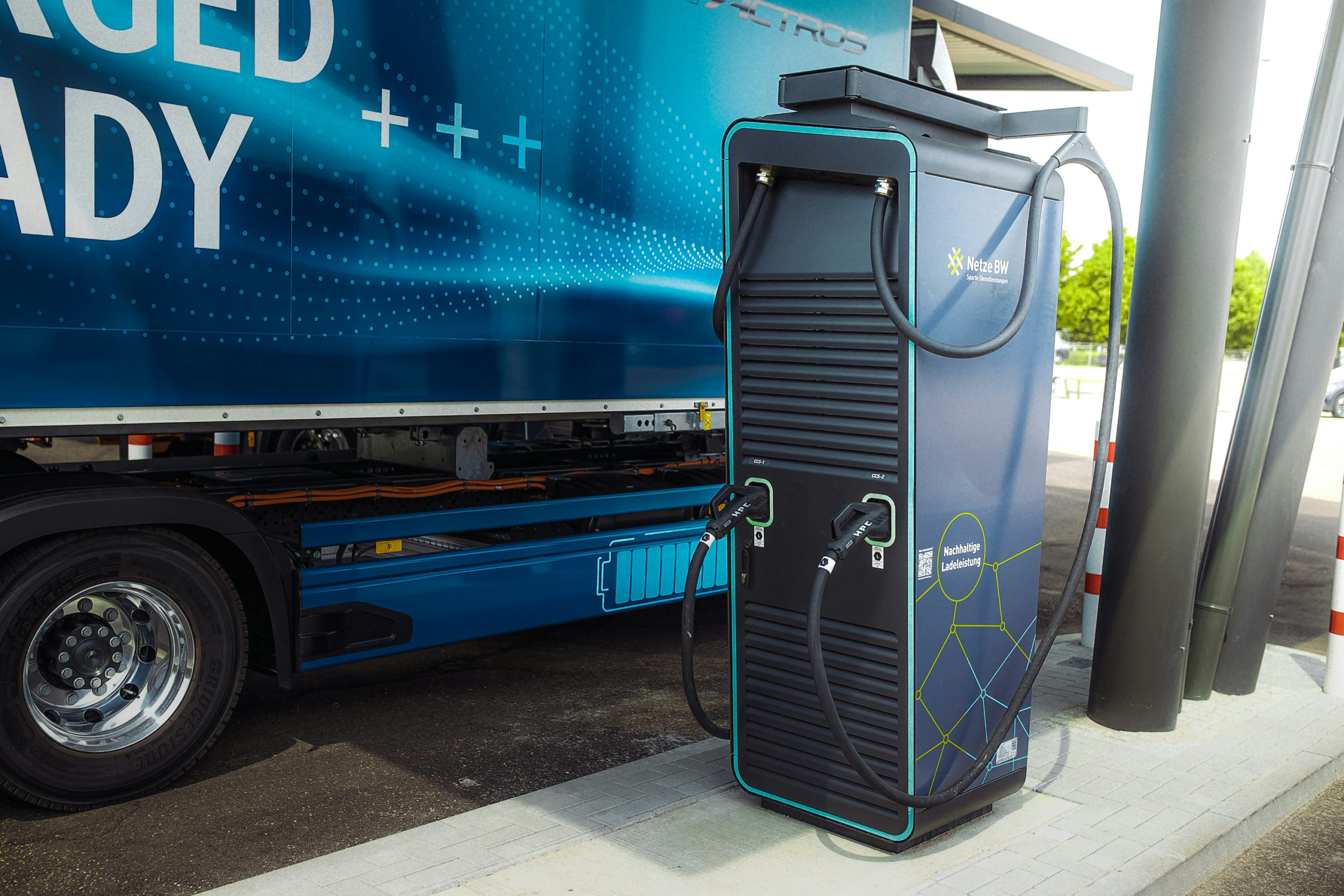
- A new CCS charger at Strood makes depot charging infrastructure part of the fleet deployment.
H E Services has added its first fully electric plant delivery lorry to the fleet at its Strood depot, pairing an 18-tonne DAF XD Electric rigid with new high-power charging infrastructure.
The DAF FA XD 220 was supplied through Channel Commercials and fitted with a 6.9m body by Charlton Bodies for machinery transport. The configuration includes a 4,834mm flat platform and a 1,858mm double-cranked beavertail section for loading construction equipment.
H E Services expects an advised operating range of 130 to 180 miles from the three-battery vehicle, depending on payload, weather, road conditions, and driving style. The truck supports DC charging at up to 150kW as well as 22kW AC charging through its onboard converter.
A CCS charger has been installed at the Strood depot to support the vehicle. Bringing the charger and truck into service together gives the operator control over routine energy supply rather than relying on public infrastructure for a vehicle working to booked plant collections and site delivery slots.
The lorry is plated at 18 tonnes and can be operated at a higher permitted gross weight under UK provisions that compensate for part of the mass added by zero-emission drivetrains. That allowance is particularly relevant to plant transport, where battery weight competes directly with payload and the machines being carried are often heavy relative to the vehicle’s overall capacity.
The new truck is not performing a conventional parcel or fixed-route distribution duty. Plant-hire deliveries can involve changing destinations, variable machine weights, waiting time at construction sites, and journeys dictated by customer demand rather than a repeated daily circuit.
Range planning therefore depends on the working pattern rather than a headline maximum. A journey carrying a telehandler on urban and regional roads places a different demand on the battery from an empty return leg, while cold weather, congestion, and auxiliary equipment can alter energy use further.
Depot charging reduces some of that uncertainty. Dispatch teams can allocate the electric lorry to work comfortably inside its available range, recharge between duties where the programme allows, and return it to a known charging point at the end of the day.
The infrastructure becomes more significant if the fleet expands. A single electric lorry can be managed around one high-power charger, but several vehicles create simultaneous demand, charger scheduling, and potentially a requirement for additional depot electrical capacity.
DAF’s XD Electric platform uses PACCAR EX-D1 and EX-D2 permanent-magnet motors across the wider range. The 220kW version is available with three to five battery packs, while the manufacturer’s current specification provides charging options including 150kW DC and combined 150kW DC with 22kW AC.
The manufacturer also offers a gross vehicle mass allowance of up to two tonnes within technical limits for electric configurations. That does not remove the payload penalty created by batteries, but it narrows the difference between an electric rigid and an equivalent diesel vehicle where legislation permits the additional mass.
The Charlton body is central to the application because the vehicle has been configured around construction machinery rather than generic freight. The flat platform and beavertail need to accommodate loading angles, tie-down arrangements, axle loads, and the changing centre of gravity created by different items of plant.
H E Services has already been testing electrification elsewhere in its operations. A recent trial of solar-assisted electric site transport examined low-speed personnel movement, whereas the DAF deployment moves electrification onto public roads and into the heavier logistics task of delivering hired equipment.
The two applications expose different infrastructure requirements. Small site vehicles can tolerate lower charging rates and operate within a defined work area; an 18-tonne lorry has to meet road schedules, legal payload limits, customer delivery windows, and a much larger daily energy requirement.
Maintenance arrangements also change with the drivetrain. Electric vehicles remove conventional engine servicing but introduce high-voltage systems, battery monitoring, thermal management, and different workshop safety requirements, all of which have to be integrated into fleet maintenance rather than treated as an isolated technology project.
The first vehicle will therefore provide operating data that matters more than a single demonstration journey. Real-world energy consumption, payload, charging dwell time, route allocation, and driver behaviour will show whether the electric rigid can cover enough of the company’s plant delivery workload without creating additional vehicles or scheduling inefficiency.
H E Services has indicated that the DAF is intended to be the first of further electric additions. Any wider rollout will make the relationship between vehicles and depot infrastructure increasingly important, because fleet electrification becomes a power and logistics programme as soon as several trucks need predictable charging at the same operating base.
The Strood deployment puts that calculation into daily service. Its success will be measured by whether a battery-electric truck can move construction plant reliably within the same operational constraints that previously favoured diesel — payload, timing, utilisation, and rapid turnaround between jobs.