IN Brief:
- Balfour Beatty has secured a £121m four-year contract for the Bramford 400kV substation extension in Suffolk.
- The works include four new circuits, two grid supply points, shunt reactors, gantries, and network control systems.
- The project forms part of the Great Grid Upgrade as Britain’s transmission construction pipeline expands.
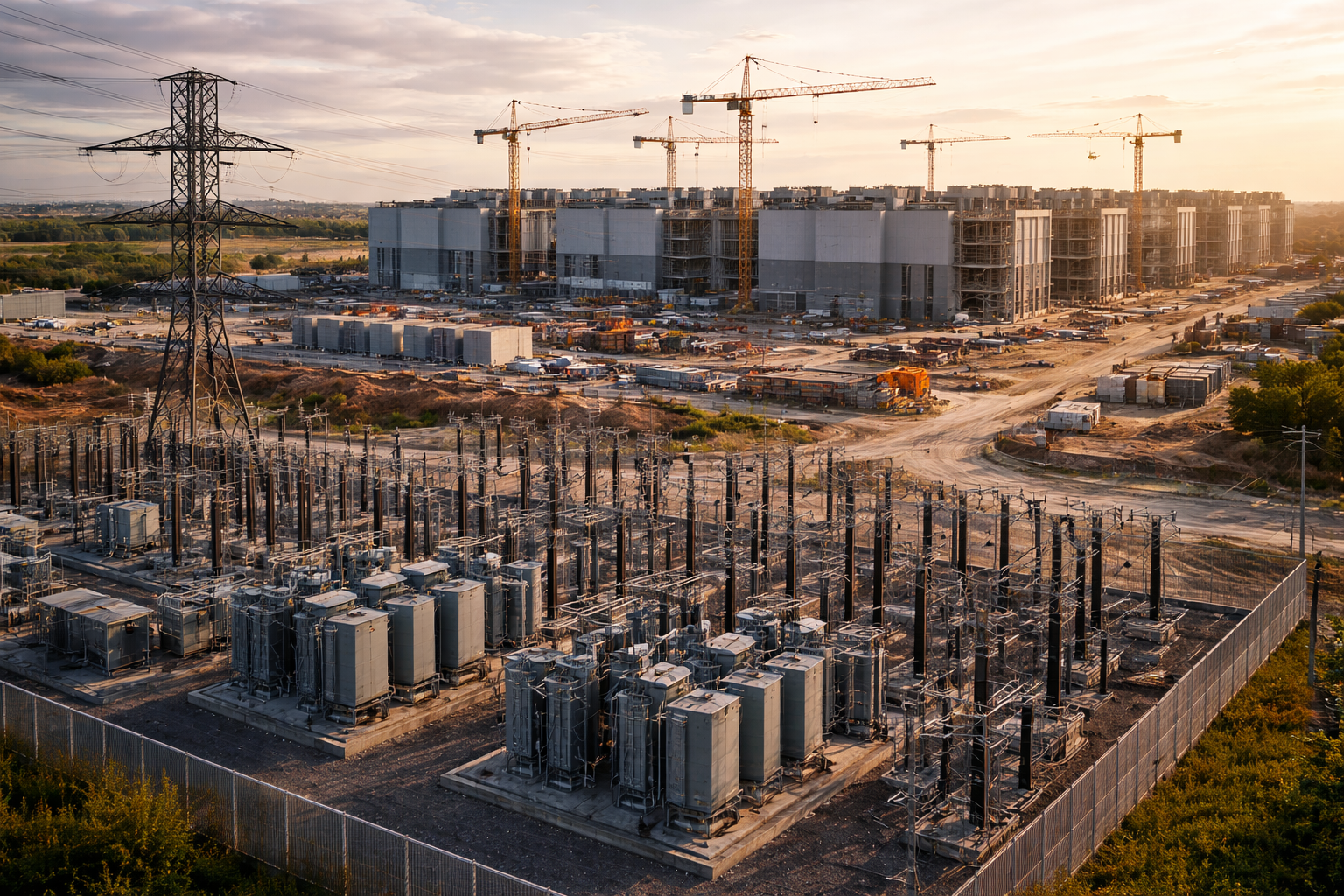
Balfour Beatty has been awarded a £121m contract by National Grid to deliver the Bramford 400kV substation extension in Suffolk, adding another major package to Britain’s electricity transmission construction programme.
The four-year contract forms part of the Bramford to Twinstead project and has been awarded through National Grid’s EPC framework. Work has already started, with completion expected in 2030 and around 150 people due to be employed on the project at peak, including apprentice and graduate roles.
Balfour Beatty’s scope covers the design and installation of the substation extension, enabling the connection of four new circuits, including two new grid supply points and two new shunt reactors. The contractor will also integrate new gantry structures for overhead line connections and design, supply, and install the systems required to monitor, control, and safeguard the network.
The project sits within the Great Grid Upgrade, a national programme to increase transmission capacity, strengthen resilience, and prepare the network for heavier renewable generation and electrified demand. East Anglia is a particularly active region because of offshore wind connections, regional load growth, and the need to move power more efficiently across the wider system.
High-voltage construction is becoming a larger part of the mainstream infrastructure market, with substation projects drawing together civil engineering, steelwork, specialist electrical installation, control systems, protection equipment, and safety-critical commissioning. Delivery teams must manage heavy equipment logistics, outages, temporary works, electrical clearances, and long commissioning periods, often while existing assets remain live.
National Grid’s recent substation construction procurement activity showed how the client is building a wider base of EPC, M&E, and civils capacity for the next phase of transmission work. The Bramford award now converts that wider market pressure into a substantial named construction package.
Energy infrastructure is also drawing more contractors into work that was once treated as a specialist utilities niche. Grid projects now sit alongside transport, defence, water, and major public infrastructure as long-duration programmes capable of supporting regional employment, specialist manufacturing, and technical services. The construction requirement extends beyond cable routes and compounds into building services, digital controls, security, access systems, drainage, foundations, and long-term maintainability.
The wider grid investment case is being shaped by data centre growth, industrial electrification, renewable generation, and the need to connect new housing and commercial development. National Grid has also sought around £4.5bn of reinforcement funding, reflecting the scale of planned upgrades across the transmission system.
For the supply chain, projects such as Bramford create sustained demand for civil contractors, specialist M&E teams, steel fabricators, transformer and switchgear suppliers, cabling specialists, plant providers, commissioning engineers, and safety-critical supervisors. The apprentice and graduate positions attached to the contract also point to a growing skills requirement as transmission construction expands faster than some established labour pools.
The 2030 completion date places the project firmly within the current decade’s grid delivery challenge. Transmission schemes carry long development periods, but demand is moving quickly as electrification spreads through transport, buildings, industry, and digital infrastructure.
Bramford will not have the public visibility of a major rail station, bridge, or civic building, yet the asset will support the kind of economic and infrastructure growth that depends on reliable high-voltage capacity. The project is another sign that grid construction is no longer sitting at the edge of the built environment market; it is becoming one of its central workloads.