IN Brief:
- Global has acquired Aberdeen-based Pier Solutions and launched Global Modular.
- The new business will focus on engineered modular solutions for energy, utilities, transmission, and wider EPC programmes.
- Pier’s 20-person team will transfer, with headcount expected to reach 100 within 12 months.
Global has acquired Aberdeen-based Pier Solutions and launched Global Modular, creating a dedicated platform for engineered modular construction across energy and infrastructure markets.
The Scottish energy and infrastructure group said Pier’s 20-strong team will transfer into the new business, with headcount expected to grow to 100 within 12 months. The acquisition gives Global a manufacturing and engineering base for modular systems at a point when energy, utilities, and transmission clients are under pressure to deliver faster and with greater programme certainty.
Global Modular will operate from Pier’s existing sites in Kintore and Inverurie. The main Inverurie facility covers 44,000 sq ft and includes corporate and engineering offices alongside a workshop equipped with overhead lifting cranes.
The business will focus on standardised and engineered modular solutions, including e-houses, substations, transmission infrastructure, and bespoke structures for wider engineering, procurement, and construction programmes. Its target sectors include energy, utilities, transport, critical infrastructure, defence, nuclear, and offshore energy.
Ryan Milne will become modular solutions director, while Jordan Ferguson of Pier will take on the role of corporate development director. Doug Gibb, who was part of Pier’s management takeover in 2023, will become finance and operations director.
Global is positioning the acquisition as part of a more integrated delivery model that spans consultancy, planning, design, manufacture, transport, installation, and support. That structure is particularly relevant to infrastructure clients seeking fewer handoffs between design, fabrication, logistics, and site delivery.
Modular construction in energy and infrastructure differs from the volumetric housing and accommodation systems more commonly associated with offsite methods. E-houses, substations, and control buildings often combine structural steelwork, electrical systems, HVAC, fire protection, access systems, controls, containment, and specialist fit-out before transport to site.
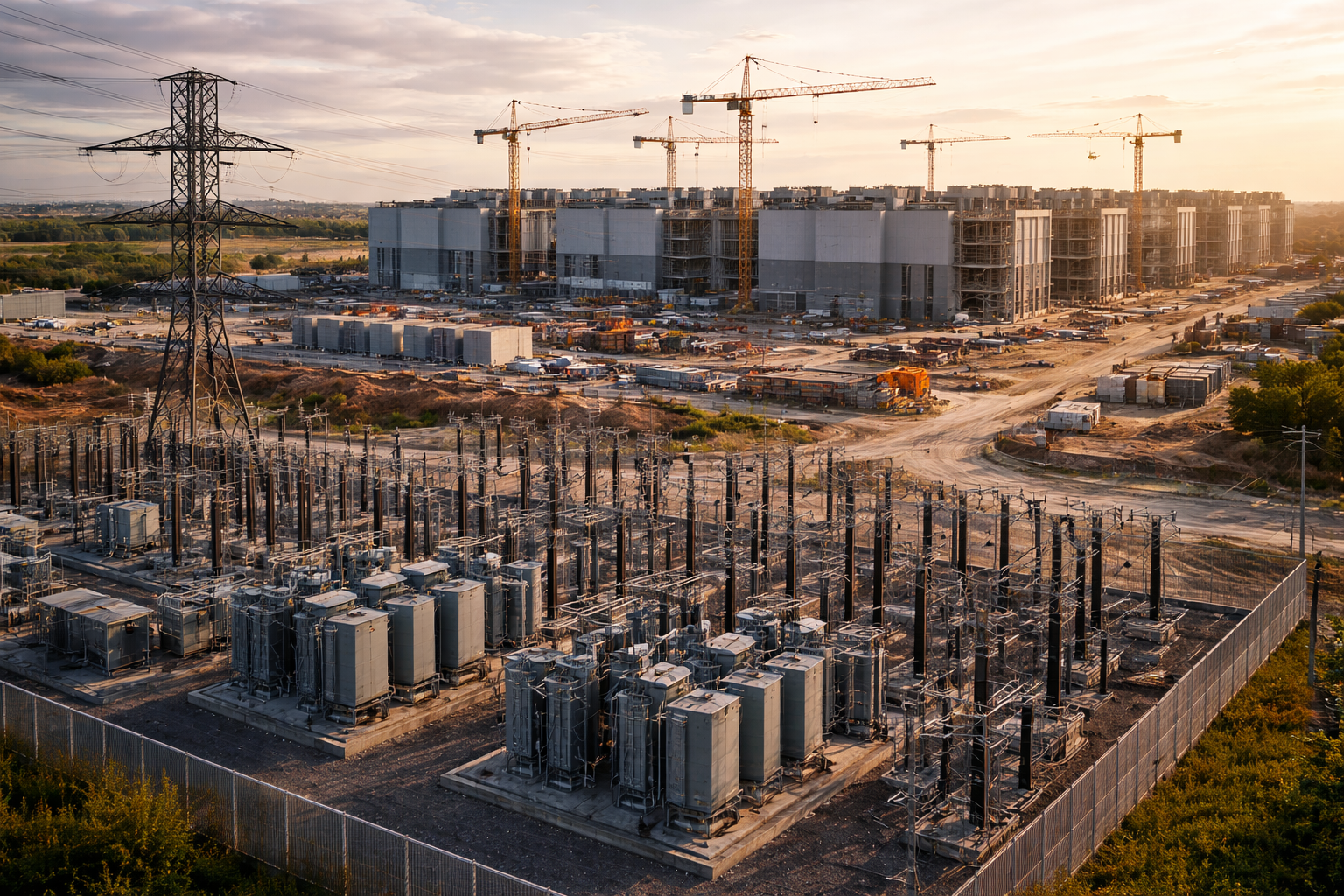
Transmission infrastructure is likely to provide a strong market for this model. The UK electricity network is entering a period of major reinforcement as renewable generation, grid connections, storage, data centres, and industrial electrification increase pressure on existing assets. Substations and electrical infrastructure modules lend themselves to factory-led delivery where design can be standardised and site work compressed.
Offsite manufacture can allow parts of a programme to run in parallel. While foundations, drainage, ducts, roads, and cable routes are being prepared on site, modules can be manufactured, fitted out, and tested in a controlled environment. When the design is mature and the interfaces are well managed, that parallel sequencing can reduce overall programme exposure.
The model is not a shortcut around design discipline. Modular delivery requires earlier decisions, stable specifications, transport planning, lifting studies, dimensional control, and careful coordination of every interface. Late design changes can become more disruptive than they would be on a traditional build because factory production depends on accurate information.
Global’s acquisition therefore places emphasis on integration. A modular business backed by wider infrastructure, logistics, and project delivery capability can manage more of the chain between design intent and installation. That can help clients reduce the fragmentation that often slows complex infrastructure work.
The launch also arrives as grid, energy, utilities, and defence projects compete for similar skills and fabrication capacity. Skilled welders, electrical technicians, project engineers, logistics planners, and commissioning specialists are already in high demand. Growing from 20 staff to 100 within a year will require recruitment, training, supply-chain support, and strong production controls.
For Scotland, the acquisition adds another example of energy transition work feeding back into regional construction and manufacturing capacity. Offshore wind, grid reinforcement, hydrogen, carbon capture, nuclear support, and wider critical infrastructure all require engineered modules, steelwork, electrical assemblies, and specialist installation services.
Global Modular gives the group a defined route into that market. Its success will depend on whether the new division can combine repeatable manufacture with the flexibility required by infrastructure clients whose sites, access conditions, electrical interfaces, and commissioning requirements vary from project to project.
The move also reinforces a wider change in construction delivery. Energy and infrastructure work is becoming more industrialised, with more value transferred into controlled manufacture before components arrive on site. Global’s acquisition of Pier Solutions puts that shift at the centre of its next phase of growth.