IN Brief:
- MEDITE SMARTPLY is investing €75 million in its Clonmel MDF manufacturing facility in Ireland.
- The programme will renew the site’s biomass boiler, fuel handling, dryer systems, and associated infrastructure.
- The upgrade will eliminate natural gas use at the plant and support long-term MDF supply resilience.
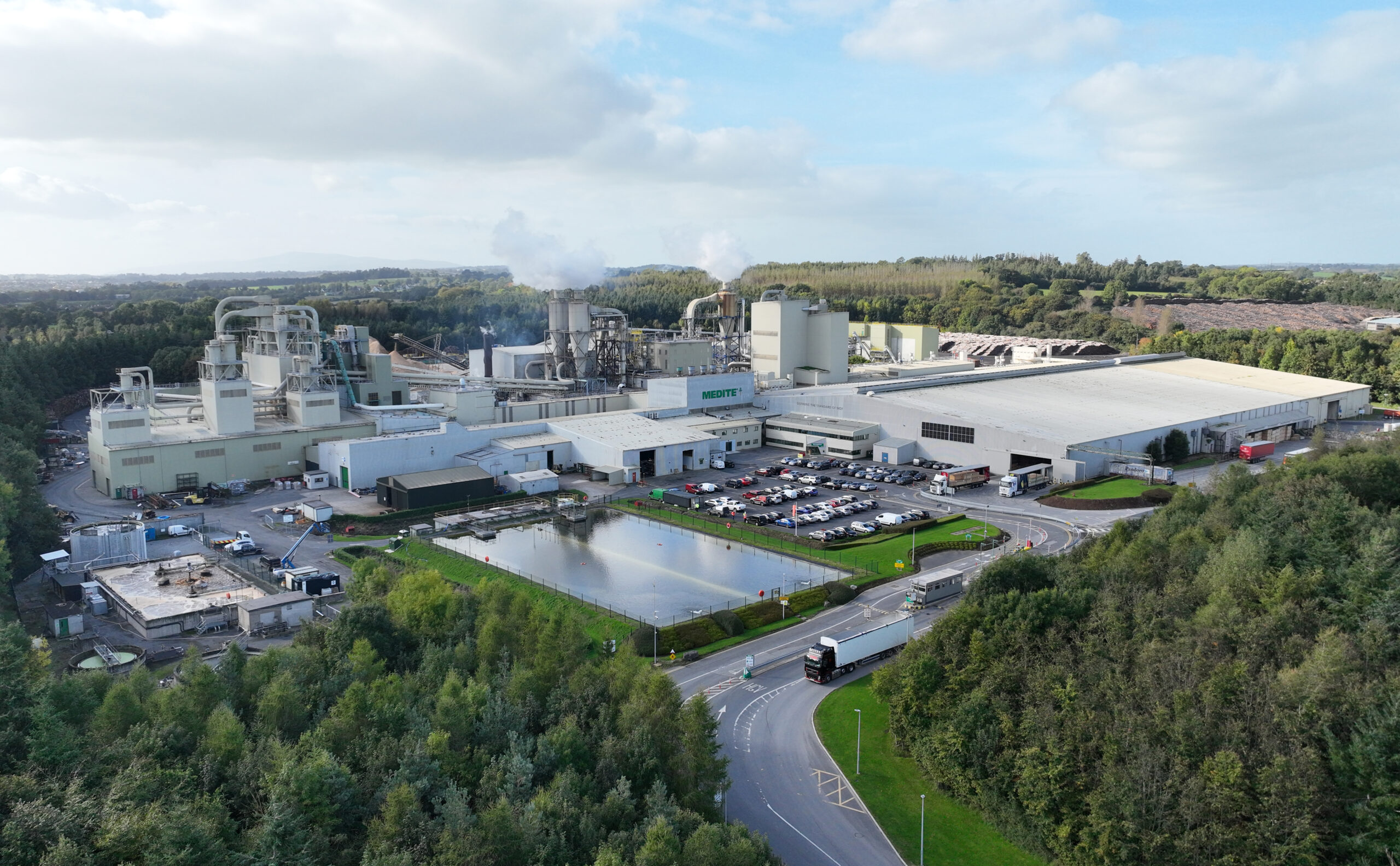
MEDITE SMARTPLY has announced a €75 million investment programme at its Clonmel MDF facility in Ireland, marking the next phase of manufacturing renewal as the MEDITE brand reaches its 50th year.
The investment will support long-term MDF production at the site, which operates 24 hours a day, seven days a week, and produces around 400,000m³ of MDF products annually. The programme is centred on replacing and renewing the plant’s existing biomass boiler system, alongside upgrades to fuel handling, dryer systems, and associated manufacturing infrastructure.
The biomass boiler provides the thermal energy required to dry wood fibre during MDF production. MEDITE SMARTPLY said the investment will strengthen process control, improve plant reliability, reduce downtime, and support consistent product quality across continuous production lines.
The programme forms part of the company’s wider renewal strategy for the Clonmel site. Dieffenbacher and Sunds Fibertech are among the European technology suppliers involved in the project, supporting upgrades to energy generation, fuel handling, and fibre drying operations.
The project has secured planning consent through Ireland’s Strategic Infrastructure Development process. The approval includes measures covering environmental protection, waste management, water supply, and ecological monitoring.
A major part of the investment is the removal of natural gas from the manufacturing process. The new system will transition the site to renewable biomass as the primary heat source, reducing fossil fuel-related carbon dioxide emissions and supporting the company’s Scope 1 carbon reduction commitments.
The programme carries weight across the construction materials supply chain because MDF remains widely used in interiors, joinery, fit-out, furniture, and specialist construction applications. Reliable panel supply depends on continuous manufacturing assets that can withstand energy cost volatility, regulatory pressure, and rising expectations around environmental performance.
Materials resilience has become a sharper concern since the shortages and logistics disruption of recent years. Acute shortages have eased in many categories, but upstream production reliability remains central to project certainty. A disruption at a specialist panel plant can affect merchants, joinery manufacturers, fit-out contractors, housebuilders, and furniture producers before alternative supply routes can be secured.
The Clonmel investment also shows how decarbonisation in building products often depends on heavy process infrastructure rather than small changes at the edge of production. Drying, heating, curing, and energy-intensive handling systems are where many of the largest operational carbon savings sit. Renewing boilers, fuel systems, and dryers is capital-intensive work, but it can produce more durable emissions reductions than changes made later in the supply chain.
MEDITE products already have a role in demanding construction settings, including exposed and moisture-sensitive applications where material stability is central to lifecycle performance. At Plymouth’s Tinside Lido, MEDITE TRICOYA EXTREME was specified alongside Accoya for restoration work exposed to salt spray, humidity, and public use.
That connection between product performance and manufacturing reliability is becoming more important as specifications place greater emphasis on durability, maintenance, and carbon performance together. Confidence in both a product’s technical performance and the resilience of the plant that makes it is becoming part of the same procurement calculation.
MEDITE SMARTPLY’s Clonmel programme combines manufacturing renewal, carbon reduction, and long-term supply assurance. It also reinforces the role of upstream industrial investment in keeping building materials available, consistent, and fit for tougher environmental and regulatory expectations.