IN Brief:
- West Fraser and Kirkwood Timber Frame have strengthened their partnership for UK offsite construction.
- Kirkwood produces around 1,000 timber-frame plots a year for clients across Scotland, northern England, and the wider UK.
- The partnership centres on engineered panel products used in walls, roofs, floors, and cassette systems.
West Fraser and Kirkwood Timber Frame have strengthened their supply partnership to support the growth of offsite construction across the UK.
Kirkwood Timber Frame, founded in 2021, produces around 1,000 timber-frame plots each year. Its client base includes self-builders, SME developers, housing associations, and national housebuilders, with work across Scotland, the Highlands and Islands, northern England, and the wider UK.
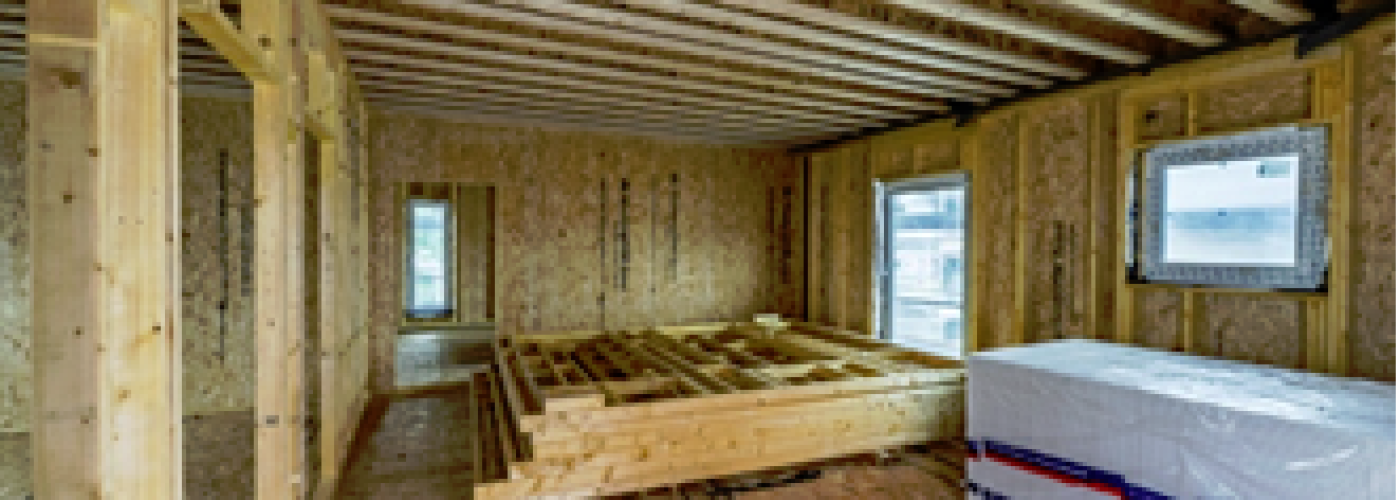
The business has standardised on West Fraser panel products since the partnership began in 2023. SterlingOSB Zero is used in wall panels, roof applications, and floor and roof cassettes, while CaberDek is used in floor cassettes where moisture-resistant decking is required during construction.
The products are delivered directly into Kirkwood’s factory, supporting controlled offsite manufacturing before panels and cassettes are transported to site. Applications have included residential schemes, care homes, sports pavilions, community buildings, and charitable projects.
Panelised construction has proved more resilient than some other forms of modern methods of construction because it fits more readily into established housing and low-rise delivery models. While fully volumetric approaches have faced commercial pressure, timber-frame and panelised systems continue to attract investment where clients want repeatability without abandoning familiar procurement and site assembly routes.
That pattern is visible in recent manufacturing investment, including the expansion of timber-frame production capacity in Selkirk, where automated panel lines have been used to increase annual output. The common thread is not a wholesale replacement of traditional building, but a move toward factory-controlled elements that reduce site labour, improve consistency, and compress programmes where design repeatability allows.
Panelised construction offers clear operational advantages when the system is matched properly to the project. Factory-cut and factory-assembled panels can reduce weather exposure, improve dimensional accuracy, and reduce the number of trades required during the early site sequence. Those gains become more valuable where sites are constrained, labour availability is tight, or housing providers need faster handover.
The supply relationship between panel manufacturer and board producer is therefore more than a materials agreement. Consistent panel performance supports factory productivity, structural reliability, and installation confidence. Standardising around known board products can reduce variability in cutting, fixing, storage, handling, and temporary site exposure.
Timber-frame delivery also sits within construction’s carbon and performance debate. Wood-based systems can support lower embodied carbon strategies when responsibly sourced and correctly detailed, although specification still has to account for fire performance, acoustics, durability, moisture management, logistics, insurance, and warranty requirements.
The wider housing market has sharpened interest in systems that can improve certainty without adding complexity. Offsite construction will continue to be judged by cost, quality, programme, and building performance rather than by broad claims around disruption. Partnerships that connect material consistency with factory process control are likely to carry more weight than abstract promises of transformation.
The strengthened relationship reinforces the role of engineered wood panels in the UK construction supply chain while supporting Kirkwood’s manufacturing output at a point when clients are looking for more predictable routes through design, production, and installation.