IN Brief:
- DB Cargo UK has bought seven Liebherr LH 40 material handlers in an £8.5m investment.
- The machines will support aggregate handling at rail freight depots, including the company’s Cricklewood terminal.
- The purchase strengthens the link between plant investment, rail logistics, and lower-carbon construction materials delivery.
DB Cargo UK has invested £8.5m in seven new Liebherr LH 40 material handlers to support aggregate handling across its rail freight operations.
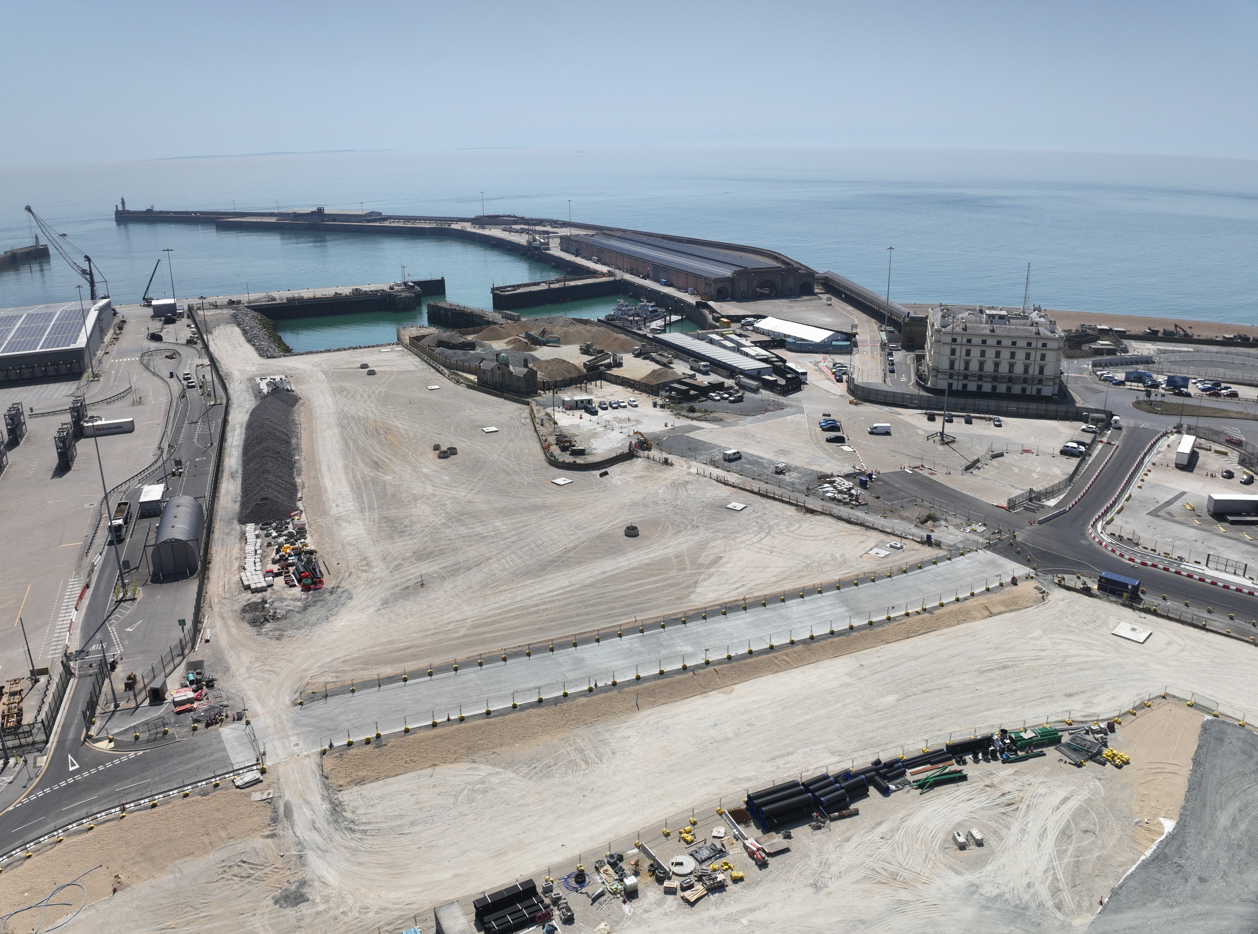
The machines have been acquired using a credit line from Siemens Financial Services and are being deployed across selected depots. One LH 40 C is already working at DB Cargo UK’s Cricklewood depot in north London, a rail freight terminal handling construction materials into the capital and exporting inert soils from city projects.
DB Cargo UK handles more than 36m tonnes of aggregates a year and operates a large fleet of Liebherr material handlers. The latest purchase is intended to strengthen bulk materials movement by rail, reducing reliance on road haulage for heavy aggregate flows into urban markets.
Cricklewood plays an important role in that model. The 151-hectare site opened in 2020 and was designed as the UK’s first net zero rail freight terminal. Its features include an acoustic barrier intended to reduce noise and dust impacts on nearby homes, while site machinery is fuelled by hydrotreated vegetable oil rather than white diesel.
The new Liebherr handlers are compatible with HVO fuel and are being brought into a materials system where throughput is critical. The depot is permitted to handle 500,000 tonnes of material a year, including incoming aggregates and outbound inert soils. The LH 40 can unload close to 1,000 tonnes of aggregates in just over two hours.
For city construction markets, that productivity is as important as the carbon case. Bulk materials logistics depends on receiving capacity, stockpiling, loading, scheduling, last-mile coordination, and reliable onward movement. A rail terminal without efficient handling plant quickly loses its advantage.
The investment comes as construction materials suppliers and logistics operators face pressure from carbon reporting, congestion, cost volatility, and urban access restrictions. Aggregate demand remains tied to housing, concrete, highways, utilities, and major infrastructure, but the routes used to move those materials are being judged more closely by clients and local authorities.
Rail freight cannot replace road haulage across the whole market. It depends on quarry connections, receiving terminals, train paths, handling equipment, and local distribution. Where those pieces are in place, however, the reduction in long-distance truck movements can be substantial, particularly for dense markets such as London.
That makes material handling equipment part of the construction supply chain rather than a peripheral depot purchase. Handling rate, reliability, maintenance access, fuel compatibility, operator safety, and fleet availability all influence whether rail-served aggregate supply can compete with road-heavy alternatives.
Cricklewood also shows how materials movement is becoming linked to spoil management. A terminal capable of receiving aggregates and exporting inert soils can support both sides of a city construction cycle, bringing materials in for new work and moving excavated material out without adding large numbers of long-haul lorry journeys.
As more clients ask for lower-carbon construction logistics, the practical details of depot operation will carry greater weight. HVO-compatible machines, productive unloading cycles, dust and noise control, and efficient rail-to-road transfer all shape whether low-carbon claims can be converted into dependable delivery.
The seven Liebherr handlers will not transform the aggregate supply chain by themselves. They do, however, show where investment is moving: towards higher-throughput, lower-emission materials handling that can support busy construction markets without pushing more heavy traffic onto constrained road networks.